


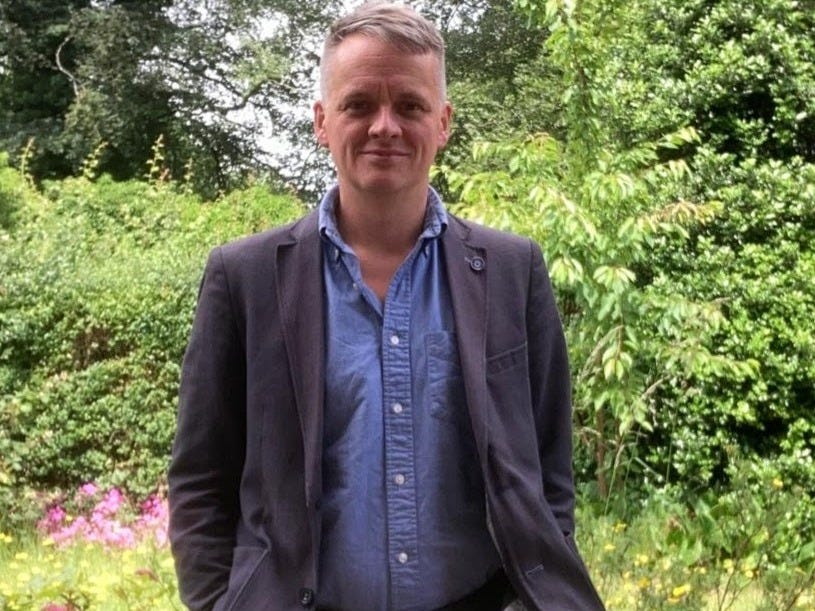
With over 25 years of research into the role of magic in human history, Thomas is the author of Cursed Britain: A History of Witchcraft and Black Magic in Modern Times and his latest beautifully illustrated book, Magick: Decoding the Visual Culture of Spells, Illusions and Psychic Powers.
His work explores why magic has captivated humanity for centuries, and how these beliefs continue to shape our world today.


For more of Thomas’s work, including his books, research and lectures, visit his Imperial College London profile.
15/10/2026, 20:37 - Finbarre:
Welcome, once again, to Tarot DMs with Finbarre.
Curses, charms, and supernatural powers all have a mysterious history.
And Dr. Thomas Waters has spent nearly 25 years, a quarter of a century, uncovering it.
From Cursed Britain to his latest book, Magick, he explores what our fascination is with the impossible.
And today, three cards meet a historian of magic!
15/10/2026, 20:40 - Thomas Waters:
There’s a lovely intro there, Finbarre. Thank you. I love how evocative it is. And yes, it is slightly, I don’t know, I was going to say chilling, but not really that. It’s kind of awesome. It’s sort of shaking in some ways to think that I’ve been doing this for so long now, for a quarter of a century. But I must say that my passion for the history of magic, my enthusiasm, my kind of love and my joy and amazement, really, that I experience, you know, when studying this topic, it’s totally undimmed. It’s as strong as it ever was. And, you know, I’m interested in all sorts of different aspects of history. Among other things, I teach at Imperial College in London. And one of the courses I teach is about the history of revolutions, for example, you know, very interested in political history, economic history, geopolitics, that sort of stuff. But I don’t know, there’s something special about magic as a way to access the kind of pathos of the human condition, really. And I think that’s the thing that interests me the most.
It’s the sort of searing, burning, sometimes agonizing, disturbing, anxious experiences that people have, that the sort of struggles that people have in their lives, and how they use magic, magical beliefs, magical practices, magical acts, magical techniques, to allow them to get through what would otherwise be impossible, or overwhelming, or disturbing. I find that really quite inspiring.
And I guess it’s, you know, it’s a theme, you know, the sort of the value of magic, the way that it can help people that can help, although it’s, I’m not saying it’s all positive, and it’s not, and I don’t want to whitewash the subject. But that aspect, it’s so important to me, really, because it’s very, you know, I’ve ended up in quite a different place in the study of magic than where I began, you know, when I started to, you know, all these, those years ago, way back in the very early 2000s, when I was an undergraduate student at Leeds University, and I began to explore what, to me, was quite unfamiliar world, really, of magic, and folklore, folk magic, and what have you.
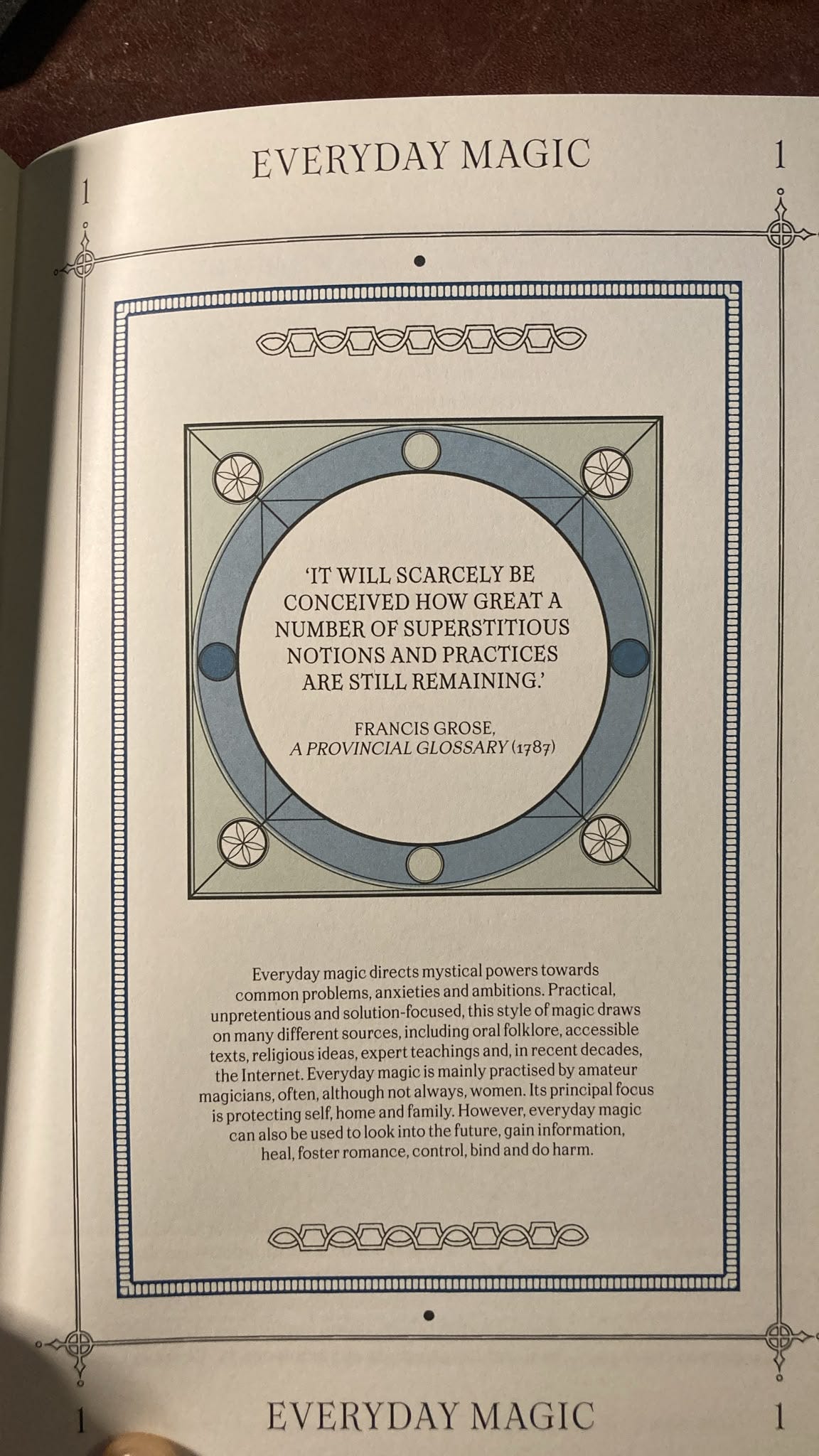
I found it very hard to imagine why people would have magical beliefs, engage in magical acts, be part of magical traditions, and I thought it was a sort of a strange thing, and something that was likely to sort of mislead people in some ways, and a kind of slightly futile exercise. So in many ways, you know, the study of magic has been totally humbling for me, and it’s completely transformed, and turned on its head, my initial suppositions about the kind of value of magic for helping people survive, for inspiring courage, for inspiring creativity, and hope, and a sense of purposefulness.
15/10/2026, 20:44 - Finbarre:
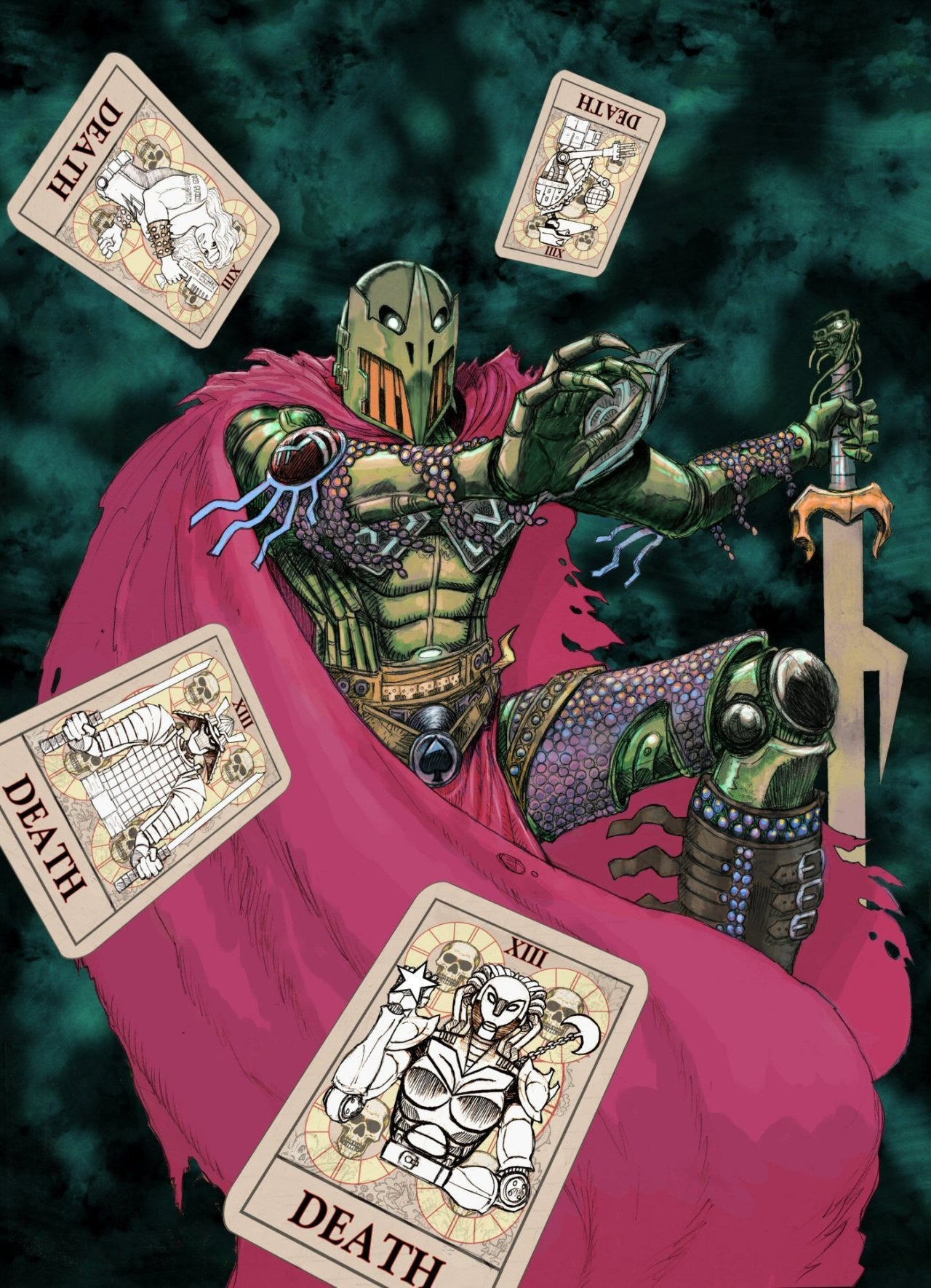
I can hear that enthusiasm and that focus and that passion in your voice for your subject. You mentioned that this came to you when you were in Leeds. Now, was there a particular route into magic? Because, to give you a little bit of my own story, some time ago there was, in fact there still is, a comic called 2000 AD. Hopefully it’s still going strong. And in that there was a character who was a robot called Deadlock.
And it was an unusual robot in that he read tarot cards. And 10-year-old me thought this was the coolest thing I had ever seen. And that got me on to, you know, artists like Alan Moore. And, yeah, went down a strange mystical path from there. How about yourself?
15/10/2026, 20:53 - Thomas Waters:
Well, the deep roots of my interest in magic are probably quite mysterious. And some of them are traceable back to, I think, like many of our passions, really, and our callings later in adult life, for many people anyway, are probably traceable back to early years in my childhood. You know, to be honest, probably a good deal of it is traceable back to the enchantment that I have in some particular books of folktales from around the world with stories about Baba Yaga, you know, the Slavic witch and all those.
But that kind of all went into abeyance as I started to get older. And, you know, I had a sort of pretty conventional teenage years and what have you in South Yorkshire in the 90s and early 2000s. What happened with my, you know, what really sort of sparked or connected me, reconnected me with magic again, and magic again when I was an undergraduate at Leeds University was, you know, I was massively keen and enthusiastic about my degree.
I absolutely loved it. I was really quite an indifferent student at school, you know, I didn’t apply myself in any way. But I loved the way that when you got to university, when you were able to take your own degree, and especially in a kind of reading subject like history, you could basically, you know, follow your own interests and you could, you know, your own creative thoughts and your own independent opinions were valuable, at least insofar as they justified by the evidence and, you know, sort of immersed in the texture of the time and all that sort of stuff.
Well, anyway, I was an undergraduate at Leeds University. Like I was saying to you before, you know, really interested in that, in the whole, in the great breadth of human experience from daily life to high politics, loved all sorts of history. I was very interested at that time in Victorian history. And this probably isn’t going to sound very magical at all. I was extremely keen on, you know, to some extent, I still am, extremely keen on what an old fashioned style of history that was called in constitutional history.
You know, it’s the study of political documents and the reform of parliament, political debates, you know, sort of could get quite precise and that sort of thing. So I was really kind of enamoured in the study of the Victorian period mixture of social history and the political history. And I was searching around for topics to write a research project on and dissertation on. And I was about to go on holiday and I wanted to read something while I was away that would, you know, provide some material to work with, some fertile ground from which a project could grow.
And so I went into Waterstones, I still remember this day, you know, and think back to it quite a lot, actually. It’s, you know, such an important day. I went, I was in the Waterstones bookshop in Sheffield in, if any of you, or if you yourself, Finbarre, if any of your listeners know Sheffield, it’s the Waterstones in Orchard Square. And I was looking through the history section and in the Victorian history section, and I spotted a diary from the period.
And it was the diary of a clergyman, kind of an obscure, what’s called a curate. So like a kind of low level clergyman, not even the vicar or something like the sort of vicar’s assistant sort of thing. The guy in question is someone called Francis Kilvert, the Reverend Francis Kilvert. And he was a kind of a poet and someone who was interested in folklore. And he worked in a parish on the Welsh border in the countryside, just on the Welsh side of the sort of English-Welsh border in the 1870s.
He had an untimely death. He died, I don’t recall exactly his age, but, you know, he died sometime in his, maybe in his late 30s, something like that. He’s a ghost now. Obviously, one could verify that. But he kept some extensive diaries. His wife destroyed the dodgy bit, the particularly dodgy bits before he died. But a lot of them lasted. And these were all edited into three volumes.
And then it was sort of abridged into a single volume. And it was this book, The Diary of Francis Kilvert, that I came across on the bookshelf. And I picked up and I took away on holiday to read. And I was absolutely blown away by the content because I’d been used to the Victorian period, studying the Victorian period to be an era of intense intellectual debate, of great seriousness, of great scholarship, of powerful puritanical forms of Christianity.
And those inspiring public movements and so on also to very painful, but very intellectual debates about the literal truth of the Bible, about the role of myth in the Bible, the kind of contrast between the archaeological record as it was becoming known and the kind of literal interpretation of biblical history. And also in the Victorian period, as everyone knows, as well, the sort of impact of Charles Darwin’s The Origin of Species and the simultaneous discovery or theorizing of evolution by natural selection by the other amateur scientist, Alfred Russel Wallace.
So that’s the kind of Victorian history I knew, basically, you know, of sort of really intellectual debates, political debates. And I’ve got this book, this Diary of Francis Kilvert, this romantic folklorist on the Welsh border. And my goodness, he recorded the conversations and the encounters that he had with ordinary people, with, you know, ordinary rural people working in the countryside, mothers bringing up families, you know, ill people.
And an era of great childhood mortality, an era of massive want in the midst of these beautiful surroundings. And the texture of life, the things people were thinking of, the stories they were telling, the things that bothered them, the things that they drew on, were all completely different to, or a good deal different to the sort of things I was familiar with. So, you know, so I’m being quite abstract about this, but what I mean is that, you know, I went from discussions about biblical criticism and constitutional history and whatnot, to instead encountering through Francis Kilvert and through his diary, people who thought they encountered on the road one night home, the spirit of their brother running towards them, who’d been deceased at that moment.
People who thought they were bewitched and tried to fight back and attack with magic, the person who they thought was responsible, people who used forms of charms and supernatural healing, people who looked in the natural world and in the human world as well. For omens, you know, when sparks came off the fire, it meant something. When a letter fell off the table a certain way, it meant something.
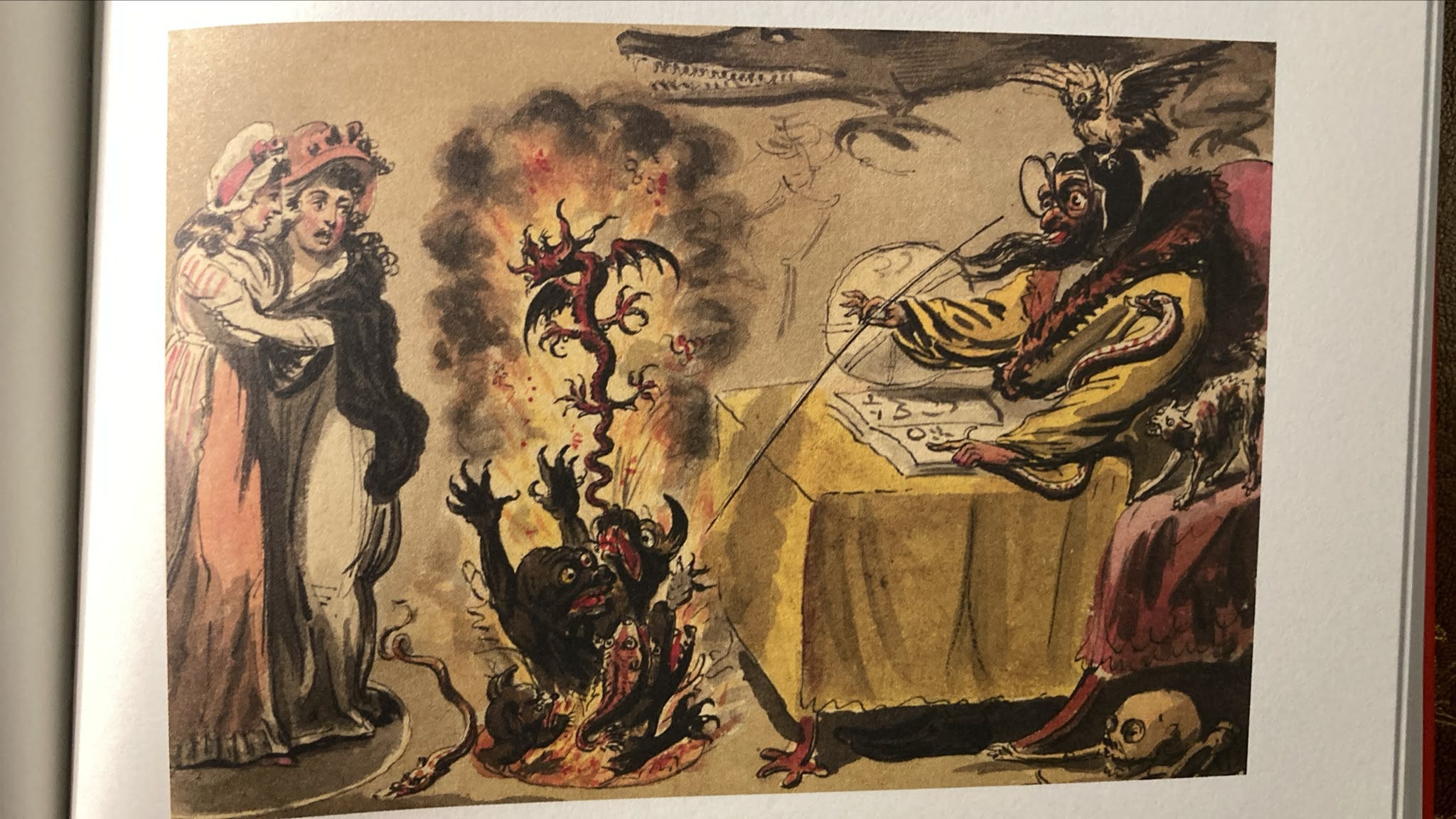
So this, it was, it was through that book really that the kind of rich and very sort of human experience of magical beliefs and folklore really came alive to me. And from there, I was, I was absolutely inspired and enchanted by this material. And ever since I’ve been involved in just sort of delving further and deeper into the world of magic, trying to find out, you know, how many sources actually are there?
What documents, what kind of material can we read creatively to sort of access the mysterious experiences and thoughts that people have and, you know, understand the circumstances in which they come to the fore?
15/10/2026, 20:59 - Finbarre:
As our conversation will be going out at the time of year when the veil is thin, I thought I would sidestep the spookiness and the horror and the mystique to something a little more fun than Halloween often offers. And we’ll be using the Rocky Horror Tarot deck for this conversation, which feels like a little bit of a tone shift. But it is a magnificent deck. So I’ve got it in my hands. And with that, I’ve drawn the first card for you.
This is The Emperor. This is the anchor card, the one that everyone gets this month. And it’s quite spectacular. Now, I’m assuming you’ve seen the Rocky Horror Show. You know what it’s about. Let me just show you this, which is a tribute to one of the finest actors of our generation, I would say. No one made a better Long John Silver. Anyway, I’m going to take a picture of this. And I’d like to get a vibe check on The Emperor card.
15/10/2026, 21:00 - Finbarre: Ta da! Possibly not the most Emperor-like entrance.

15/10/2026, 21:05 - Thomas Waters:
Thank you very much, Finbarre, for sharing The Emperor card. The thing that jumps out at me about this, the sort of intuitive feeling I get, or the instant response, is that this card conveys powerfully the sort of dualistic quality, the contradictory, ineffable qualities of magic. That magic can be, for example, it can be, you know, like this card here, which has got a sort of masculine and a feminine aspect.
It’s got a sort of restrained with the cross leg, but also incredibly sort of open and powerful and charismatic aspect to it. It’s got these sort of, you know, these sort of dual qualities. I think magic’s like that as well, the whole realm of magic. You know, once magic is very simple, very easy to understand. It’s something that is instantly comprehensible to us. We can pick up and understand and comprehend and identify with previously unfamiliar magical traditions very easily.
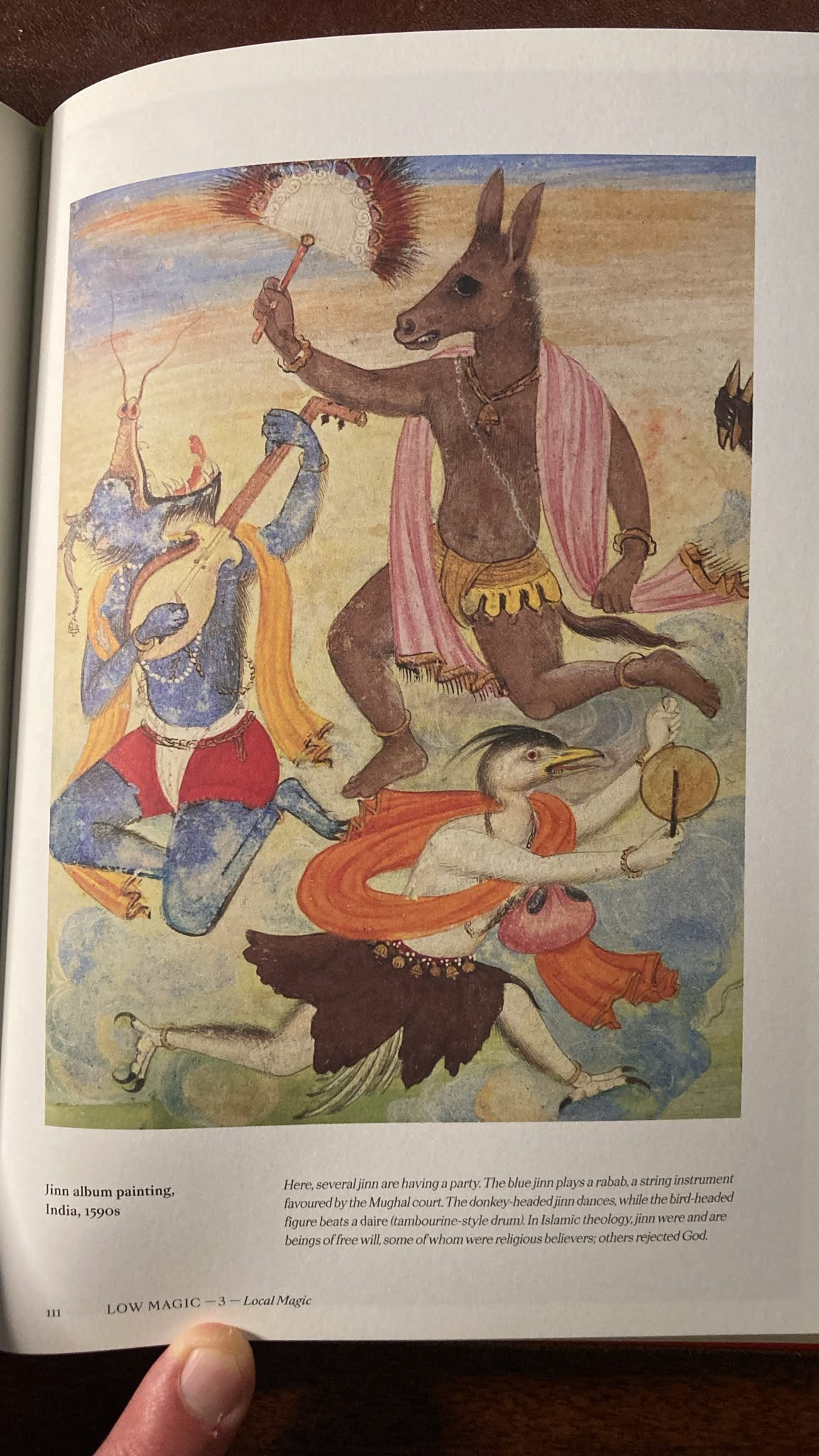
We totally understand it at an intuitive level. Children understand magic. It’s nothing could be simpler. It’s literally child’s play. They understand the concept. They can use it so, you know, so readily, so prolifically. And yet at the same time, magic is incredibly complicated and difficult and demanding. Many academic scholars of magic, you know, feel that it’s impossible to give a single overarching definition of magic.
There’s something about the topic that always escapes a single reductive definition. It’s something about the magic is lost or there’s some dimension of magic that just isn’t captured in it. So, you know, magic like this Emperor card has these dual qualities. It can be a secretive type of topic. Something, you know, the unsaid, the unsayable. Something to be watch your words carefully for fear of disturbing supernatural forces by, you know, for example, using, regardlessly, heedlessly using the offensive names or boldly using as a normal mortal the names of magical creatures.
You know, we’re not supposed to say fairy. We’re supposed to say good people and so on in Irish tradition. So magic can be secretive, but it can also be incredibly in your face and powerful and rebellious. You know, and we can see that sort of around us. Some people, you know, are into magical aesthetics, magical lifestyles. And that’s not just this, you know, where really striking, really, you know, sort of bold apparel and what have you.
And I should say that’s something that one can see in the shops, in the streets, in places in, you know, in the 21st century, in the Western world. But it’s not just that kind of in your face aspect of magic. It’s not just a kind of modern alternative magic quality. You know, even if there’s some stuff about this in the book, in Magick, you know, if you get to go back to 1800s Brazil, say, enslaved people of African heritage who’d been sent to towns to get jobs, work by their, by the people, by their notional owners.
You know, some of these people used amazing amulets that were incredibly loud and sort of in your face and very conspicuous and made of jangly material. They’re called Pencas generally. You know, you can look at this.
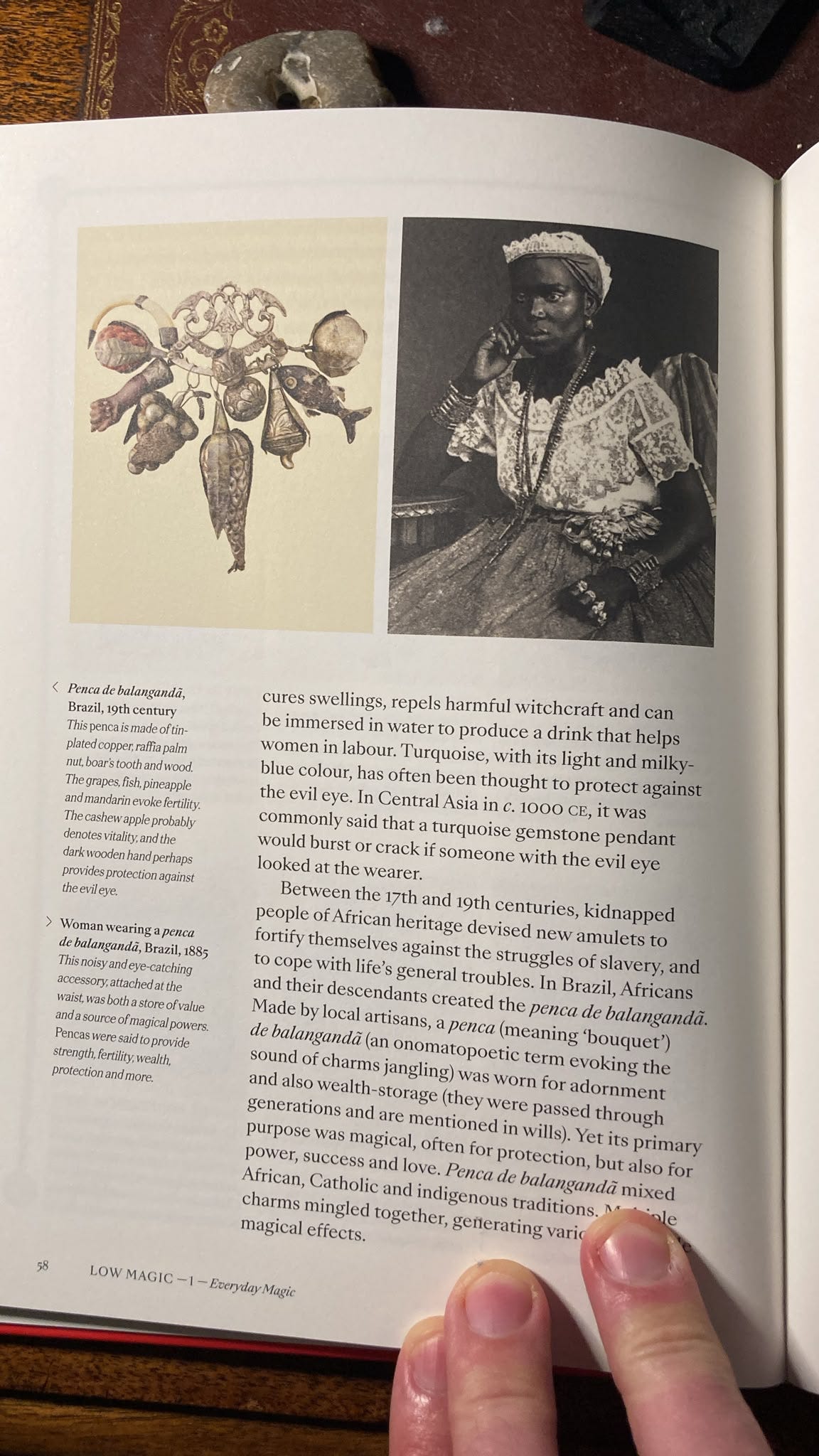
So that’s how I respond to that card. I feel it conveys the power of magic, the charisma of magic, and also the sort of contradictory qualities that magic often has.
15/10/2026, 21:05 - Thomas Waters: We can also use this deck if you prefer
15/10/2026, 21:05 - Thomas Waters:
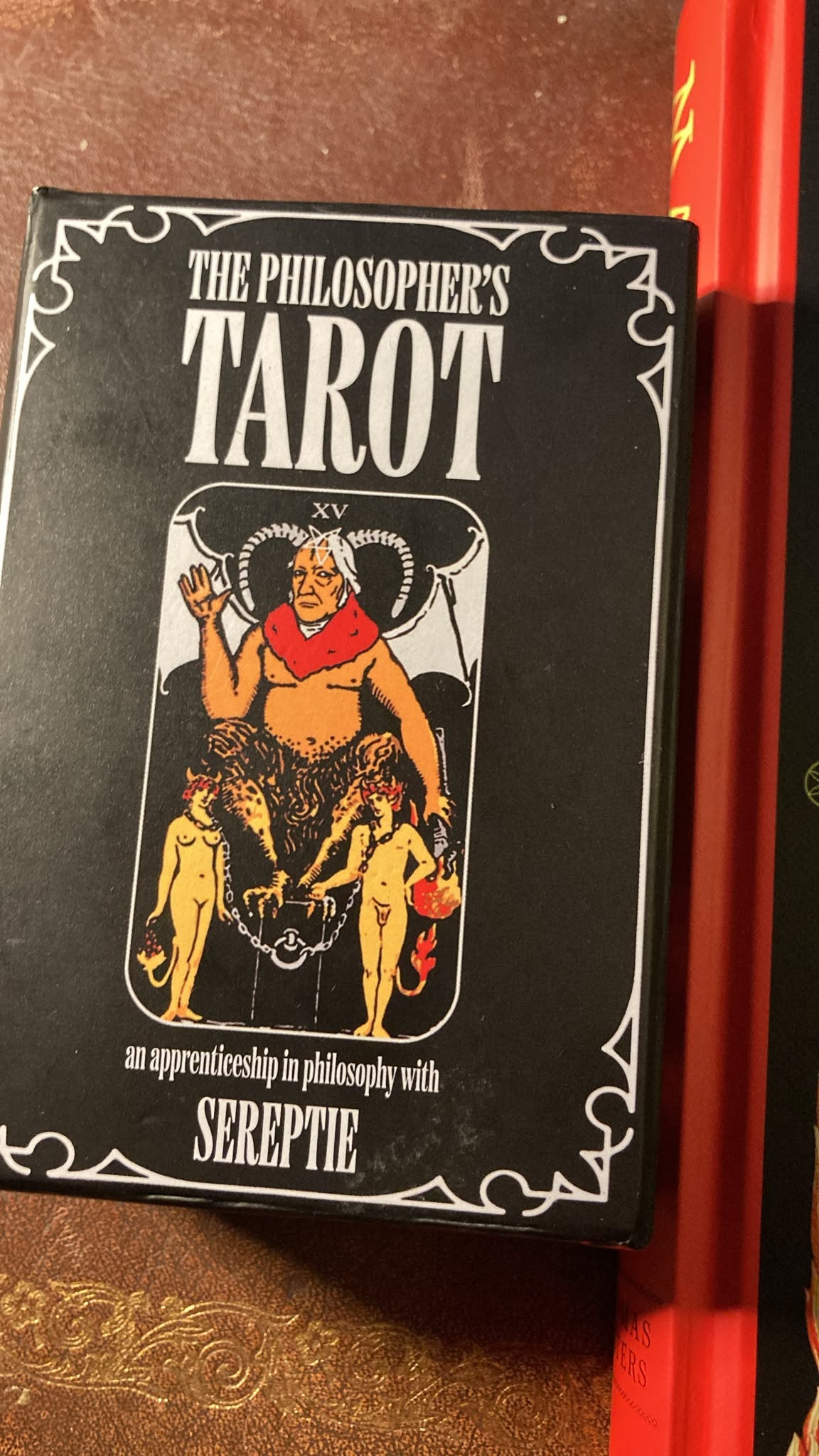
15/10/2026, 21:05 - Thomas Waters: But Rocky Horror deck is excellent too
15/10/2026, 21:06 - Thomas Waters: Whatever you prefer ⭐️
15/10/2026, 21:08 - Finbarre:
Thank you so much for that rich analysis. I don’t think I’m going to look at that card quite the same way again. Coming back to the idea of power within the card, often the emperor is one of authority. And I know from reading Cursed Britain that you were looking into witchcraft and witch trials. Was there anything in your research that changed your views about how people in power treated women accused of witchcraft?
15/10/2026, 21:15 - Thomas Waters:
The distinctive thing about Cursed Britain as a history of witchcraft is that it deals with the modern period rather than the early modern period that’s conventionally or much more frequently studied in the history of witchcraft. So that, you know, these are quite sort of awkward names that are used by historians. So, just to demystify these. You know, the early modern period conventionally among historians refers to the period between the end of the Middle Ages and roundabout the Enlightenment.
So basically, to put it very simply, that talking about the 1500s, the 1600s, the early 1700s, and that was the era when the European and also the American witch trials were underway, the period when, according to the best estimates, somewhere between 70 and 100,000 people were tried for alleged witchcraft. And around half of those people appeared to have been found guilty. And that’s 35,000 to 50,000 people who lost their lives on that basis for what seemed to have been imaginary crimes. 90% of those people were women.
I don’t want to digress. I better not digress too much, although I kind of, I love to and love to talk about every aspect and connection in the history of magic. The history of witch trials is, you know, really vital aspects of human affairs, because as unfortunately as a species, we have a propensity towards abusing people and sort of scapegoating people and accusing people ultimately of dreadful things that they haven’t done.
And specifically in terms of accusing people of casting harmful magic, I’m afraid to say what I’m trying to say here, basically, is that the witch trials, although, you know, they were particularly prevalent during that early modern period of European and, to a lesser extent, American history, that’s not the only time that there have been witch trials. There were witch trials in the classical world in the West and in the East. There were witch trials in ancient China, witch hunts, anyway, witch persecutions.
Likewise, in the Roman Empire, in many sort of smaller scale societies as well, in parts of sub-Saharan Africa, elsewhere, there are persecutions of witches and alleged witches are still suffer massive human rights abuses around much of the world today. In particular in parts of rural India, in Melanesia and Papua New Guinea, there are some African countries that have refuges for people that are accused of witchcraft.
And there are even some accusations and some, you know, on a much smaller scale, but it still happens even in the West. Anyway, so my book is not so much, it’s not about the kind of early modern period when, you know, there were laws on the statute book in Britain against witchcraft and people being prosecuted. But instead, it’s about the evolution and the persistence and the nature of beliefs about harmful magic from around about the late 1700s in Britain to the present day.
And also in the British Empire, it’s about how widespread were these ideas, you know, after the period of the witch trials, how often did people and in what circumstances did people begin to believe that their misfortunes, their illnesses, their loss of jobs, their relationship problems, you know, their struggles, trouble sleeping, bad luck, financial problems, whatever it may be.
In what circumstances and how often did people start to think that actually these might not just be normal misfortunes that can be dealt with in a conventional way by going to the doctor, by trying harder, by working harder, by consulting the priest, by going to a council or whatever. But instead, they might have a single occult origin. So that’s what Britain’s about, really. It’s about how beliefs about harmful magic, you know, when things went wrong, people frequently began to think in this way, especially in the 1800s.
And even in the early 1900s, these ideas have never completely gone away. But they did reach a lower ebb, though, in the kind of, right about the middle of the 20th century, sort of, you know, time from about World War I, leading on up to 1950s, 1960s. And, you know, these beliefs waned somewhat, I think it’s because, you know, people’s standard of living was getting better. Medicine was getting better.
But above all, as well, the state at that time became very heavily involved in trying to sort of regulate the medical marketplace. And there were a raft of new laws that further criminalized the providing of unconventional health care, alternative remedies, stuff like that, magical healing, basically. So there’s a big kind of clamp down on the what scholars would call, I guess, the service magicians, cunning folk, fortune tellers, stuff like that.
And I think that kind of disrupted the belief system somewhat. So that’s what Cursed Britain‘s about. In terms of surprises in doing that kind of work, I was surprised at how widespread beliefs about harmful magic were, even in the 19th century. I was surprised that what seems to have diminished the most harmful consequences of these sorts of ideas, and the harmful consequences were basically when people went to attack, whether magically, ritualistically, or, you know, just physically.
It was horrible violence, even a few murders when people went to attack the people they believed were bewitching them. Or there were other harmful consequences of if you get sort of shady healers or something preying upon people’s paranoia, people’s beliefs. Those kind of harmful consequences were diminished in the sort of late 1800s, early 1900s, not so much because people were getting better educated and were sort of rationally and self-consciously abandoning magical beliefs, but more because of an interventionist state.
There were more police around to prevent vigilante acts, and there was more kind of regulation of the medical marketplace. That was one of the surprises there in Cursed Britain.
15/10/2026, 21:22 - Finbarre:
There is a tangent, a beckoning off the path that I’m trying to resist at the moment because my family way back when, my mother’s maiden name was Manners. And that line of the family, the Manners family, were linked to, I think in the 1600s, I think it was about 1610, 1620, sometime right about then, were linked to the Witches of Belvoir. From the Belvoir Vale. And there were, I think there were three ladies, Joan Margaret and Philippa Flower, who were herbal healers in that area, were killed for being witches.
And the people who would have done it, or the people who would have been baying for justice from a very unfortunate incident where two children died and these women were blamed, were linked to my family. So I’ve always, I’ve always felt some kind of, I don’t know, that a debt needs to be repaid. But anyway, that is my family history. And we’ve got card number two to do. Instead of going down that path, let us continue on to the wild card.
Now the wild card is one that we just draw from the deck. Could be anything. And I would like you to do that with combining, let’s see, we have fishnets over here and we have philosophers with you. So if you could draw a card and take a picture, I’d love to see what the second card will be.
15/10/2026, 21:24 - Thomas Waters:

15/10/2026, 21:29 - Thomas Waters:
Well, Finbarre, of course, like everyone, I was kind of hoping that I’d draw one of the Major Arcana, some of the cards from the Philosopher’s Tarot that I love. The Hanged Man is Michel Foucault. You know, that’s so cool. The Magician is Félix Guattari, the French philosopher. You know, I love that card. I love that association. Félix Guattari, you know, I’m not learned about philosophy, I must say.
But in so much as I understand it, you know, Félix Guattari thought that philosophy, the main task of the philosopher, wasn’t to communicate or so much to convey or understand, but to create new concepts. So, you know, it was a kind of creative act and that’s why he’s associated with the magician. I love those cards. But instead, what’s come out is the Two of Pentacles, the Doctrine of the Mean.
But this card, this humble card, I think actually, you know, looking at it now and thinking about my work and how it relates to it, I think it encompasses something really important and profound about studying and writing about magic effectively, that it has to have these two elements and neither one can gain too much ascendancy or get too out of control. And what I mean by that is, as I see it, the study of magic, the evocation of magic, at least as a scholar, at least as I do it, I’m not trying to tell anyone else how to do it.
But the way I try to approach it is, I try to combine a very empirical, very thorough, very serious, you know, kind of long-winded, exhaustive, really, investigation, like the sort of very, you know, very kind of complete and enthusiastic approach to the scholarship. With that on the one hand, with also an attempt to kind of empathize with the people that you’re studying, to feel their experiences, to get inside their heads, and to try and evoke with imagination and with creativity and with empathy, the experience of magic, the experience of magic, the sorts of situations that conjure magical beliefs and magical thoughts, the sorts of circumstances where magic acts feel right.
So the doctrine of the mean, it’s like, you know, you don’t want either of those things to go too far. You know, imagination is so valuable and creativity within scholarship and within the study of magic. But if it gets too far, then it becomes sort of overly, I don’t know, sort of overly expressive of self, perhaps too, dare I say, too imaginary. The scholarship, the empirical study, the immersing oneself in the written records, in the primary sources, in the secondary sources, in the sorts of material that I use.
The folklore sources, books of magic, antiquarian works, historic newspapers, diaries, archaeology, everything. Both of those aspects, the kind of, the sober scholar in the archive, and also the sort of, you know, the imaginative approach as well of somebody trying to empathize with and understand and almost experience the beliefs and sort of happenings of others. Those are the two things I think you’ve got to marry.
That’s at least what I’ve tried to do. You know, to be scholarly and also evocative, to be thorough and also kind of powerful and emotional. That’s what I’ve tried to do with my scholarship, both in my first book, Cursed Britain, and in this latest book as well, in Magick, Decoding the Visual Culture of Spells, Illusions and Psychic Powers. And I think that kind of dualistic approach, not letting one get the ascendancy over the other, bringing both to their sort of their height.
That’s what I think is embodied by the Doctrine of the Mean that you can see here.
15/10/2026, 21:33 - Finbarre:
There is something about the artwork of this card that makes my stomach feel a little uncertain because there’s an unsteadiness of the feet, although this is part of the juggler’s dance. You have the fluid motion, the never-ending movement of the balls, or the pentacles in this case, and you have that rolling ocean in the background. I know it’s a static image, but I can’t help but move looking at it.
With this being a juggler’s card, I’d like to ask you a practical question about your tools. How do you organize your research? Do you have, as the conspiracy theorist meme would show, bits of paper on your walls, bits of red string, hither and yon?
How do you put all of this together? I mean, you have, as we’ve looked at before, 25 years’ worth of research, of thoughts, of notes, journals. How on earth do you keep that in order?
15/10/2026, 21:39 - Thomas Waters:
Thank you for those remarks and that question, Finbarre. I think you’re right about, really right, you know, very insightful to emphasize the constant motion in order to keep the mean going and to keep sort of juggling the two aspects. And, you know, I was talking about those two aspects in terms of the sort of empirical hard-nosed scholarship and also the more sort of empathetic and imaginative approaches. And I think those two things, you know, are in kind of constant motion.
And there is always a danger that one will go wrong, one will get to ascendant or to descendant. So there is a kind of constant juggling involved. In terms of practicalities, for all these years that I’ve been doing my research, I use all sorts of different things, a bit of everything, really. Anything that kind of helps it to catch fire in my mind, anything that helps it to really sort of resonate, you know, the material I’m looking at, anything that can sort of help me understand it and help me sort of drive me on in my work. So, you know, I’m being too vague here, but practically speaking, I’ve got Much to the Despair of My Wife. I’ve got the sort of the massive home collection of books and quite a lot of those have got writing inside them and turned over pages and lots of them have been returned to many times. I’ve got a huge shelf of notebooks that I’ve used over the years, you know, Moleskine type things and other, all sorts of other lovely notebooks that are all filled with different things. And, you know, with notes from sources, whether it be manuscripts in the National Library of Scotland or the Bodleian Library or something like that, to, you know, notes on books, notes in places, notes about people that you’ve, that I’ve met and that I’ve encountered.
I’ve got lots of files that are filled with individual sheets. And each sheet is a case study of where there’s been a case of witchcraft, a case of witchcraft belief, a case of fairy belief, something like that from the historic newspapers. I’ve got, you know, reams of those. I spent, I spent a whole year, an entire year of my academic work was combing through the newspaper archive, the Victorian digitized, largely digitized newspaper archive to look for cases where the press had reported there’d been outbreaks of, of accusations of witchcraft or people had gone to court because they tried to attack an alleged witch or they’d been taken to court because they’d been providing magical services and the clients weren’t happy, whatever it was.
And I, I combed through year on year, day by day, month by month, you know, all the keyword searches going through it and adding them all together. And that, you know, that, that like, that was some of the, that basically was the basis of a few chapters in Cursed Britain. So, you know, I’ve got things like that. And I also have my, my computer, my beloved laptop, which I do so much, so much of my work on.
I mean, you know, you’ve got reams of, you know, different documents and, and works and things on the, you know, like you said, I’ve been doing this for 25 years now and I’ve written quite a few articles and, you know, in some ways, perhaps I should have written more than, than two books. But it’s just the way I do it, I’m afraid. And I, you know, I hope the material is good in the end. And, you know, I, you know, I try to have high standards when, you know, when the final thing’s created.
So it’s, it’s a kind of mixed approach. There’s some, there’s some tactile stuff. There’s a lot of paper stuff. There’s a lot of notebooks. There’s a lot of box files, but there’s also all sorts of recording on the computer and, you know, word documents, Excel sheets and various things. It’s a house and a life that’s, you know, dedicated to this as my vocation. It’s not just sort of my job. It’s so much more than that. And, you know, it informs so much, so much of my life.
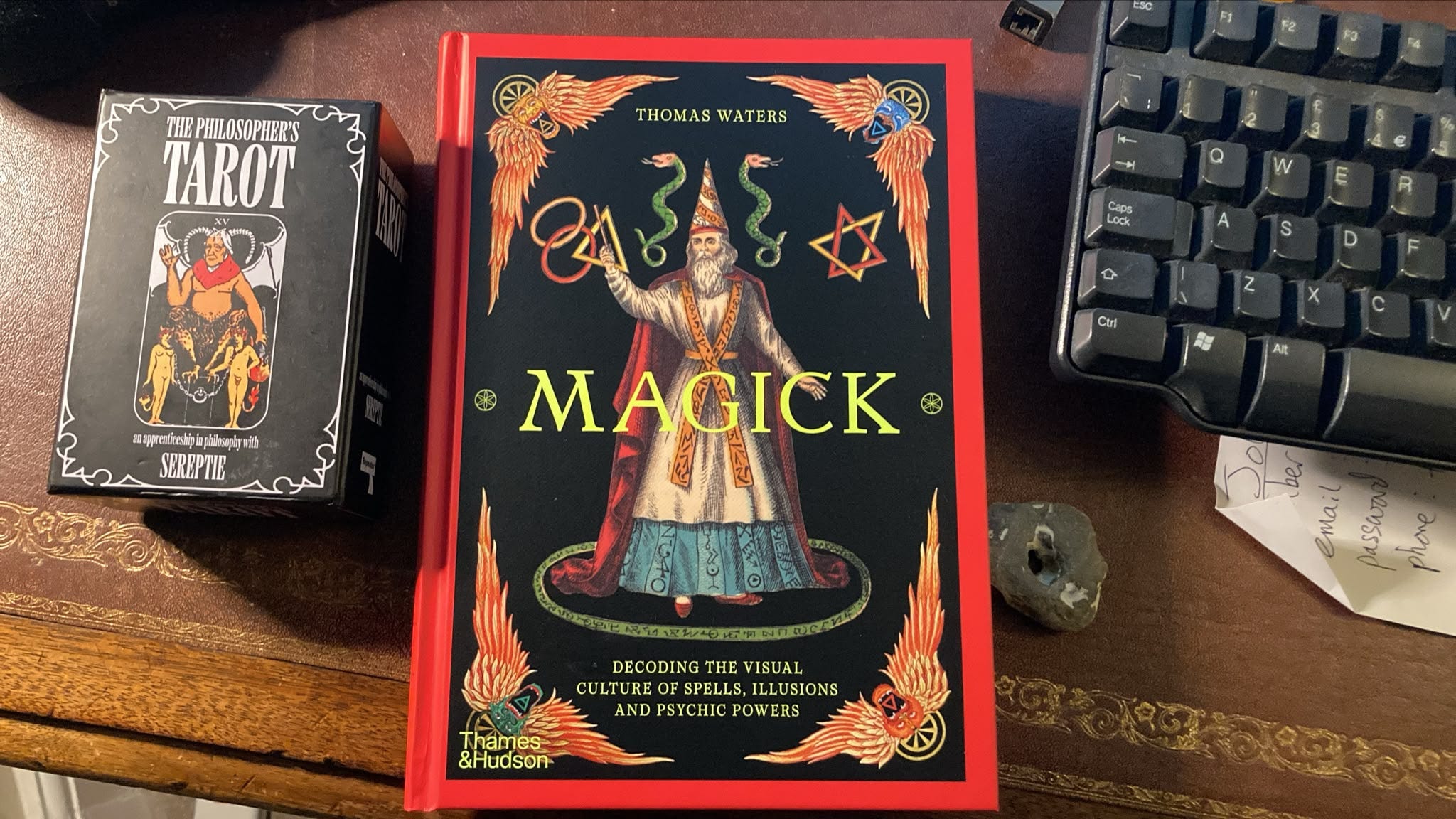
So there’s the, you’ve seen in the image that I sent of a hagstone, you know, that my poor family, you know, they have to have a house filled with protective and lucky objects with Marian figures or with Bibles, with strange writings in them from the Victorian periods. And all sorts of things like that. So it’s a, it’s a bit of a mix of the old school and the modern IT approach.
15/10/2026, 21:44 - Finbarre:
Before we move on to the third and final card, I have this wonderful image of this occult Aladdin’s cave in your house. What is, in your view, the most powerful, if it comes to blessed or cursed or potent, object you’ve come across?
The kind of thing that you would pick up and get goosebumps from?
15/10/2026, 21:45 - Finbarre: Do you have an object which by rights should have a sign saying “Do not mess with this”
15/10/2026, 21:50 - Thomas Waters:
Well, it’s not quite a sort of a conventional occult collection that I have, because I think I’m particularly drawn towards the folk magic style of magic. You know, my new book, Magick, is broken up into three sections, nine chapters, as well as an introduction on all sorts of different types of magic. And there’s folk magic is one of the sections. High magic is another one of the sections.
And the third section is alternative magic. And the folk magic section is broken up again into chapters about everyday magic, about local magic and about community experts. But the kind of magic that really appeals to me is the most subtle, the most defensive, the most low key, the most kind of positive, you know, without any sort of potentially negative or harmful connotation.
So I’m talking about things like, you know, house protection, you know, sort of, you know, keeping the hostile energies out, trying to keep your family safe, that sort of thing. So really, you know, a Marian figure in Britain, historically, and still a little bit today. And certainly historically, you know, up until the early 20th century, even 20th century, most of the houses used to have a Marian figure in a little, a little alcove on the sort of above the door or something like that.
Outside, you know, outside, you know, a sort of little ceramic figure, basically, of Mary, mother of Jesus. You know, I have my holidays in Brittany. I’m very glad to say I love my holidays in Brittany. I love Brittany so much, you know, the sort of the folklore, the landscape, the food. And, you know, I got in an antique shop there, I’ve got a Marian figure from there. So that’s the sort of material I’ve got. There are a few exceptions, though.
And it’s, I suppose, you know, to answer your question more directly about what’s the most sort of, what’s the type of item that sends a bit of a shudder through you? One of the things I have got, and I’m uneasy about having it, and I kind of leave it in the cabinet near some very positive items because of this. But it’s something that really interested me, because I think it reveals a lot about the social history.
I’ve got a Bible from the early 1800s. You know, there’s a sort of massive boom in the publication of Bibles and the selling of Bibles in the early 1800s in Britain. And this Bible inside it’s got, like many Bibles at the time, it’s got the person’s name who’s given it, you know, who’s given it to her. It was awarded it with some guy, you know, from a, you can deduce this from the handwriting, the phonetic spelling.
It’s someone from a kind of, you know, like a sort of background of limited formal education. Somebody that lived in a little village in Oxfordshire in Black Bourton in the 1840s. And it’s got his name, it’s got some of his family names, later people.
But the reason I bought it was because as well, inside this Bible is a curse. And it’s not a curse to attack just sort of the person around it, their enemy. It’s a specific type of curse, a book curse. Book curses have a long history. They go back to the Middle Ages. And these, for all book lovers like myself and all wonderful book lovers out there, these were the methods of holding on to your texts in a day when, in times when they were extremely valuable and hard to replace and massively sought after, perhaps even more so than now.
So the curse that’s about not stealing the book, basically. It’s, you know, roughly the curse is something like, you know, steal not this book, my blessed friend, for fear the gallows shall be thine end. So, you know, don’t steal this book or else you’re going to end up on the scaffold or, you know, going to lead to an untimely death or something like that. So it’s a protective curse that’s supposed to stop anybody from stealing the book.
But it’s still, you know, even as, you know, someone who’s, you know, got big doses of skepticism within them. I’m not saying it’s all consuming. It’s not my only attitude to magic. But it is something that troubles me. And I like to leave that particular object, which I think is, you know, is revealing about the kind of low level magical, the secret magical techniques people would use even on a book like a Bible to protect it in the early 19th century.
It’s an interesting piece of social history. But I still like to sort of leave it inside the cabinet, hemmed in the, you know, the bookshelves with a glass front to keep the energy surrounded by lots of other positive items. So there you go. That’s the answer, Finbarre.
15/10/2026, 21:53 - Finbarre:
Thank you, Thomas, for indulging my curiosity. And we’re here at the final card. What I’ll do here is send you a picture of the card that’s been given to you. This is from Jenna Matlin, the writer of the Tarot Book of the Dead. And this card, I think, will be one that you’ll like. What I’d like you to do after this is pass on a card of your own to the next person. But first, we have The Moon card.
15/10/2026, 21:53 - Finbarre:
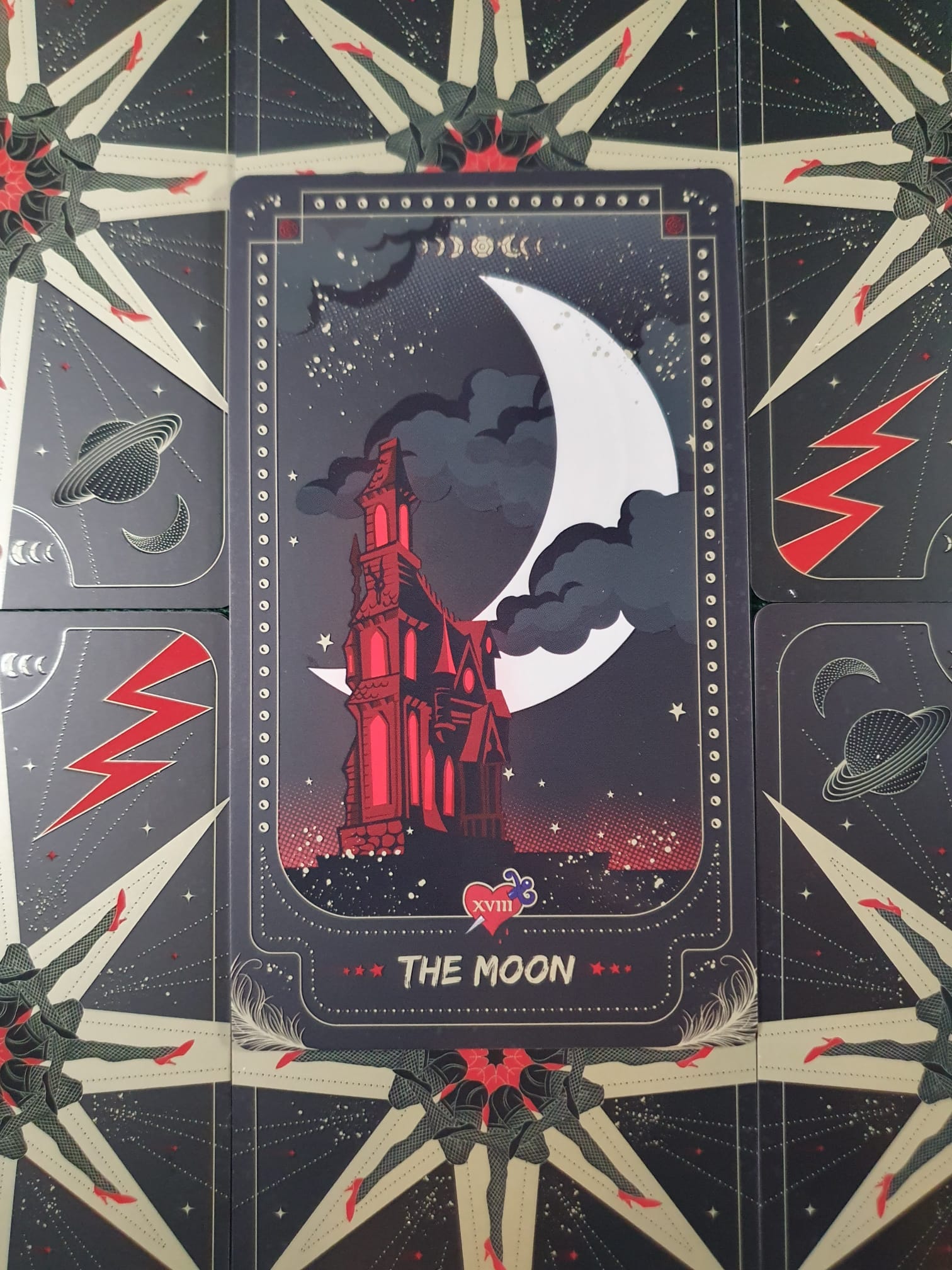
15/10/2026, 21:53 - Finbarre:
The card of mystery and intuition and illusion and uncertainty. Is there anything about the world of magic that puzzles you to this day?
15/10/2026, 21:58 - Thomas Waters:
Thank you for that last and beautiful and inspirational card. And thanks to Jenna for passing it on. It does appeal to me. I’ve done a lot of research on what you might call the social history of the moon, the role of moonlight, the lunar calendar in people’s lives and everyday, or should I say every-night, lives in the past. Unfortunately, I’ve always got so many, you know, always trying to do too many things. I need to publish that among other stuff eventually. But anyway, I won’t get distracted on that. It also makes me think as well, you know, of what a night owl I’ve been for many years as well, although less so at the moment.
Other things that still puzzle me about magic. Yes, absolutely. There are many magical traditions that I still have to learn very much more about and still can learn very much more about, particularly East Asian magic, Chinese divination, especially the I Ching, you know, sort of oracles, books like that. So, you know, there’s sort of very many specific traditions that I am keen and continue to learn more about magic in South America before colonisation, magic in ancient India as well, you know, connection with the Vedic scriptures.
So there’s all sorts of elements and so on. I suppose in particular, the tradition I’d like to know more about, but in a strange way, I don’t think we’ll, you know, sort of has a mystery to it that I’m not sure we’ll ever overcome, is what’s today known as the grimoire tradition, the tradition of books of magic, you know, like the sort of the lesser key of Solomon, the Grand Albert, the Petit Albert, this sort of thing.
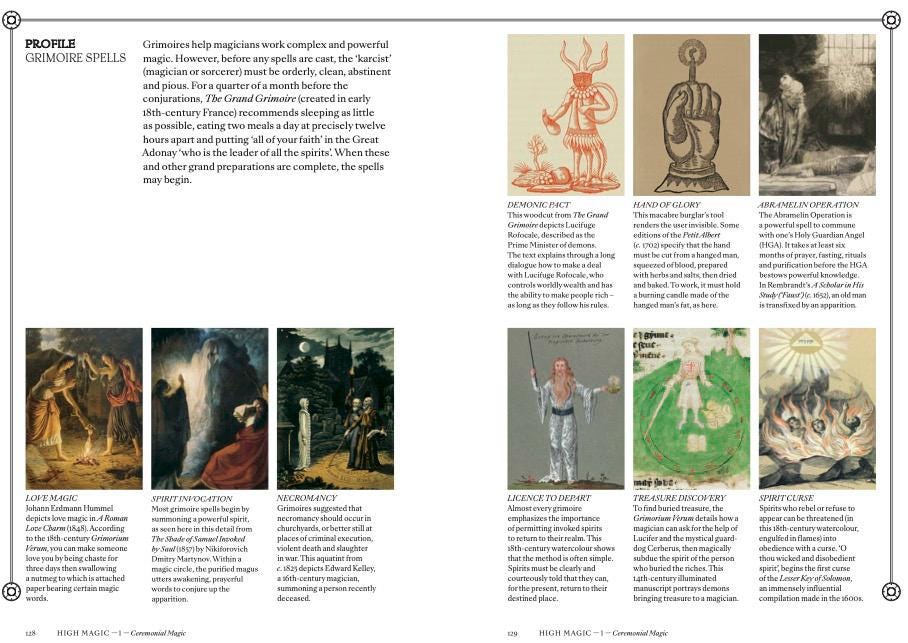
The, you know, the grimoire tradition that meant so much was adapted and, you know, and furthered and studied by members of the Golden Dawn and, you know, the great creators of iconic tarot decks and all this sort of stuff. You know, I still think there’s a lot of scope to look into its deeper origins and try and find out more precisely the order that certain texts were created.
You know, it’s so vague on specific titles, you know, we don’t know when they first emerged and where and who wrote them. It’s such a challenging area to study. A second thing I’ll say, I want to say another thing that’s mysterious about magic that’s eternally mysterious. Another aspect of magical practice, another different tradition, the sort of tradition of everyday magic and folk magic, that’s rendered mysterious by the need to be silent.
And I alluded to this earlier on by this kind of eerie feeling that many people have that it’s dangerous to speak about awesome powers, that if you do, it’s going to tempt fate, that it’s going to unsettle supernatural forces. It might make bad things happen. And because of that, a lot of people who believe in magic or who fear it or who have suspicions will sometimes be quite guarded.
You know, there are lots of aspects of magic that remain mysterious. And it’s a very rewarding and a challenging topic to study because of the kind of veil of secrecy that’s thrown over so much of it.
15/10/2026, 21:58 - Thomas Waters:
Okay, and as for a card to pass on, I should get my Philosopher’s Tarot deck out and pick the next card at random, and then I’m going to send you an image of this. There we go. Oh, it’s very nice, this one. It’s René Descartes, The Page of Pentacles, and I shall send it on to you now.
15/10/2026, 21:58 - Thomas Waters:

15/10/2026, 22:02 - Finbarre:
A fabulous bringer of fortune to finish on. Are you happy with your cards?
15/10/2026, 22:02 - Thomas Waters:
Yes, I am happy with the cards. Although I’d never say I wasn’t happy with the cards. I think it’s imperative that one accepts one’s fate and makes the best of it. Thanks very much, Finbarre. It’s been a real pleasure.
15/10/2026, 22:05 - Finbarre:
Oh no, the pleasure is all mine. And one of the reasons why I love doing Tarot DMs is hearing about those things that light people up, hearing about their projects, hearing about what gives them that creative spark. Dr. Thomas Waters, thank you for joining me and reminding us that the history of magic is the history of people. And a reminder to the audience that your latest book, Magick, is out now.
Thank you for reading and for listening.