


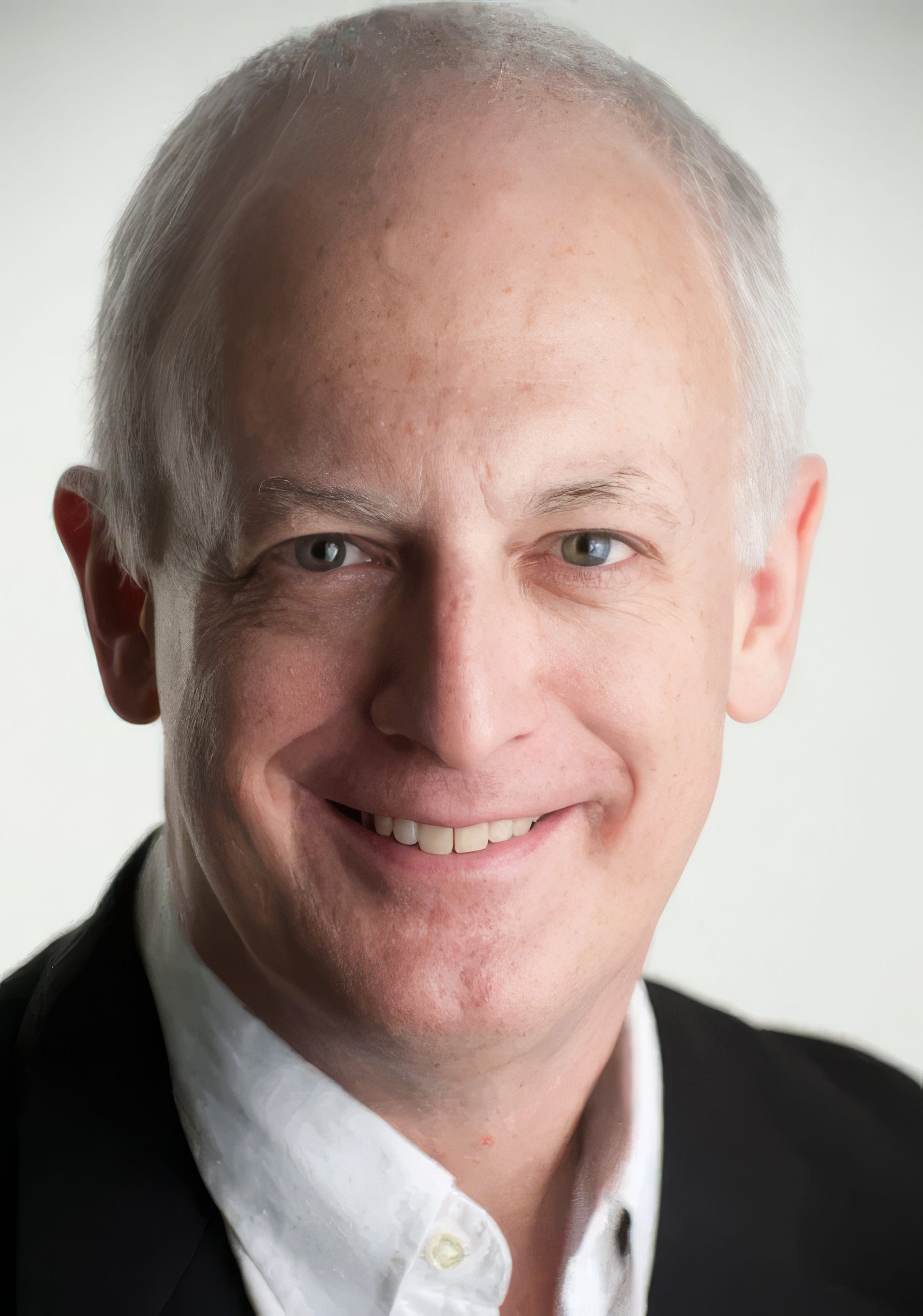
Michael Shapiro is a Grammy-nominated composer and internationally renowned conductor whose work was praised by The New York Times for his “rare melodic gift.” With over 100 works spanning opera, film, and symphony, his music is regularly broadcast globally on major networks like NPR and the BBC. He is perhaps best known for his acclaimed original score for the 1931 classic film Frankenstein, which has been performed live to film in over 75 productions worldwide.
A Juilliard-trained musician, Shapiro has collaborated with world-class organizations including the Royal Philharmonic, LA Opera, and the BBC National Orchestra of Wales. Beyond his extensive guest conducting and recordings on the Naxos label, he serves as Laureate Conductor of The Chappaqua Orchestra.
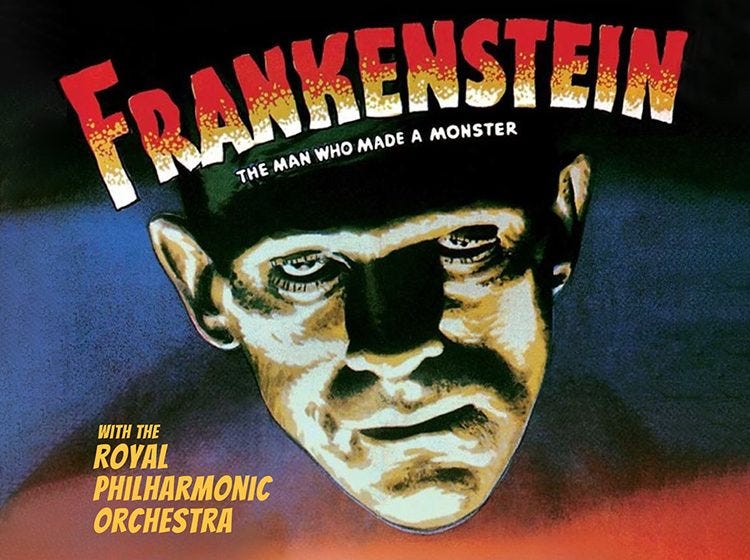
Michael will conduct the Royal Philharmonic Orchestra at the London premiere of his Frankenstein score, performed live to the classic 1931 film.
Sunday 25 October 2026, 3.30pm & 7pm
Cadogan Hall, Chelsea, London
Nearest Tube: Sloane Square
For full event details and tickets, visit Cadogan Hall.
03/10/2026, 16:21 - Finbarre:
Welcome to Tarot DMs with Finbarre.
In 1931, Boris Karloff’s monster came to life in Frankenstein, but without a musical score beneath him.
70 years later, composer Michael Shapiro decided that the monster deserved one.
Since then, his Frankenstein, the movie score, has travelled around the world, accompanying James Whale’s film with music that can make the creature frightening and tragic.
But Michael’s musical world stretches much further: more than 100 works across orchestra, opera, chamber music, film and song, alongside a career on the other side of the podium as a conductor.
Today, however, somebody else gets to choose the score.
We have 78 cards, 3 questions, 1 composer and possibly a monster lurking somewhere in the Major Arcana.
Michael Shapiro, welcome to Tarot DMs.
03/10/2026, 16:22 - Michael Shapiro:
So wonderful to be with you.
You know, when I wrote the score, I watched the movie repeatedly because I had to figure out in each scene, what did James Whale intend?
He was not there for me to, quote, spot, close quotes, the film, which is what you do with a director, you know, of a film.
So I had to spot it myself, which was hard.
But I must have done something right because there are now six versions.
And the London premiere is happening very shortly at Cadogan Hall, right off Sloane Square in the very beautiful neighborhood in Chelsea.
And it’s gone on to, you know, so many performances now, reaching shortly by next year, nine dozen worldwide.
The London premiere… 25 October!
03/10/2026, 16:22 - Finbarre:
Michael, before we draw the first card, which is the Anchor card and the card that every person this month after you will receive.
This has been tailored specifically to your project, and you’ll see why in a moment.
Before I draw that, I need to ask you a quick bonus question.
I only recently read, and I hate to say, this is my confession, I have only recently read Frankenstein, the book.
Can I ask, what age were you when you first read it?
03/10/2026, 16:24 - Michael Shapiro:
I believe I read Mary Shelley’s Frankenstein whilst I was in college at university in New York, at Columbia, and I’ve reread it many times since.
Of course, it is very different from the 1931 film, which was done on a completely new basis.
03/10/2026, 16:25 - Finbarre:
Speaking of the monster, he has somehow found his way into the first tarot card.
Let me present to you the Emperor.
03/10/2026, 16:25 - Finbarre:

03/10/2026, 16:26 - Michael Shapiro:

IT’S ALIVE!
03/10/2026, 16:27 - Finbarre:
I could almost hear the sound of a Tesla coil behind you as you said that.
This is a reimagining of the classic Emperor card from the Rider-Waite-Smith by Kipling West, and this came out in 1996.
What feelings do you get from this card? What does it represent to you?
03/10/2026, 16:29 - Michael Shapiro:
Well, a quick story, please.
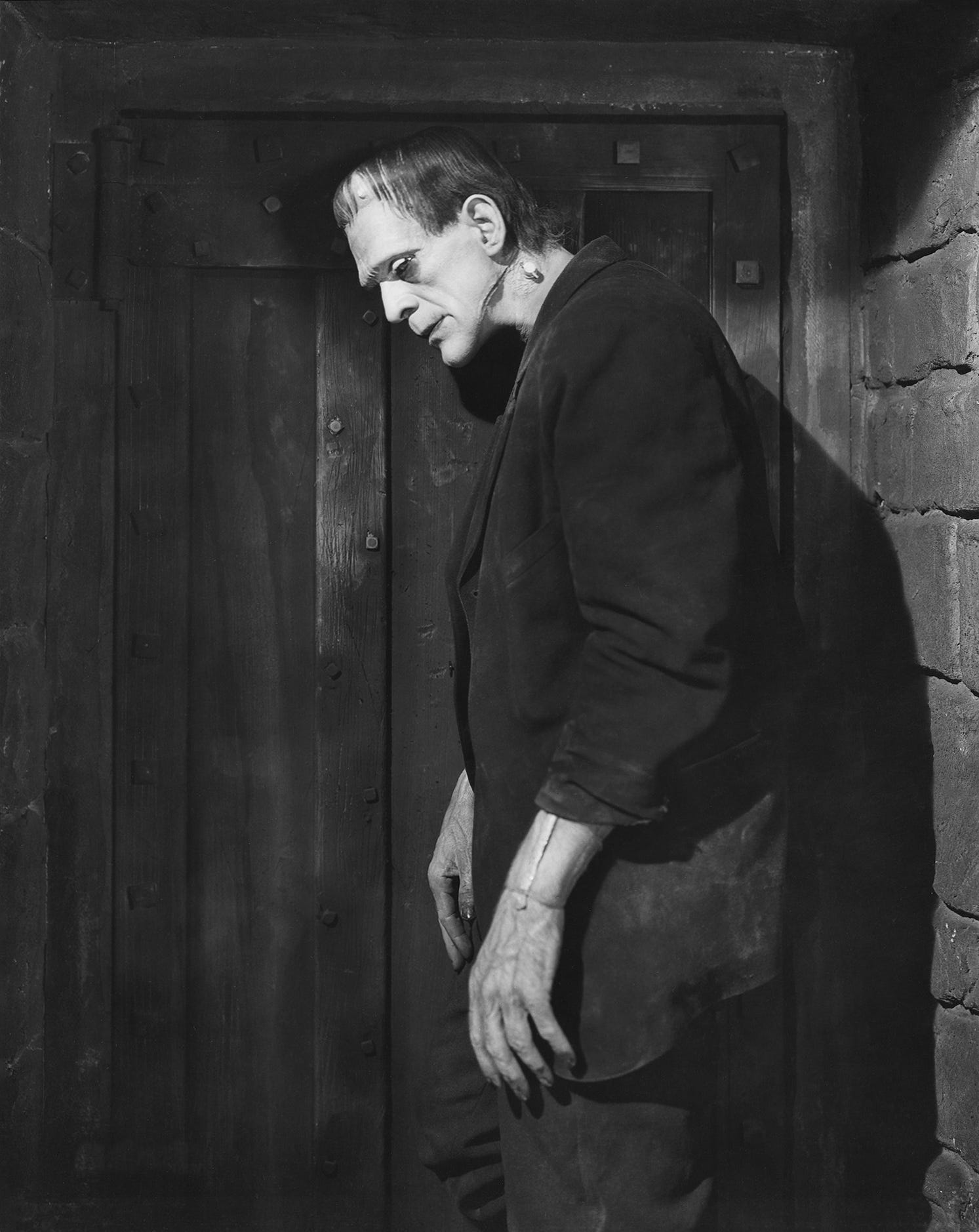
I watched the movie on local television, what was then called the Million Dollar Movie, when I was quite young. And I remember my dad coming and seeing my brother and I watching the film, the original 1931 Boris Karloff film, of course, without a score.
And he said, “Turn it off. You’re going to have nightmares.”
“Dad, what are you talking about?”
Well, it turns out that in 1931, when my dad was 13 years old, he saw the film at the local movie house and it gave him nightmares for a week.
It didn’t give nightmares to me.
And what does the card mean to me? And what does the image mean to me?
Well, you know, children understand the Frankenstein creature, the monster. They understand how the monster is the persecuted, not the perpetrator. And this is something that our dear friend, Sara Karloff, the only child of Boris Karloff, talks about frequently.
And she’ll be with me on stage in a Q&A with Pamela Hutchinson before our performances on the 25th October, matinee and evening, at Cadogan Hall with the Royal Philharmonic Orchestra.
So the monster to me is a creature with a soul.

And I have a great story of my even writing Boris Karloff when I was just under 10 years old and I am sending back his autographed picture.
So when I see this, I see a friend.
03/10/2026, 16:34 - Finbarre:
I have books galore of the various interpretations of these particular cards and traditional meanings.
But when I hear interpretations like yours that evoke such a vivid story, I’m going to be picturing that next time I ever draw this card.
Thank you so much for sharing that story.
If this particular card was going to ask you a question from the meanings that I’ve heard previously from the emperor, it’s a card of reliable systems.
It’s a card of protection and it’s a card of boundaries.
This is also somebody with a power of authority.
So the question I would ask you is what has your conducting taught you about leadership?
03/10/2026, 16:37 - Michael Shapiro:
Leadership is about the participation of not only the musicians with the conductor, who must obviously lead the musicians to some sort of truth.
But what is the truth, we ask?
The truth is what’s written in the score, meaning that the score tells us what to do and how to impart it.
Everything can be done at different speeds. We call it tempos, tempi in Italian.
We can phrase things differently.
We can bring the orchestra together, or sometimes not so together if the attacks are wrong.
But a lot of it is about breath.
And breath is something we all possess. And breath is the fundamental cause and reason for life.
So one of the great loves of making music is communal breath.
And that’s what a conductor needs to do. He needs, or she needs, to have the orchestra breathe together and phrase and attack in the right rhythmic framework.
How the composer and what the composer is trying to say emotionally in that very moment.
03/10/2026, 16:40 - Finbarre:
Michael will now move from the anchor card to the Wild card.
So we’ll be going from Frankenstein to who knows where.
And in my hand, I hold the 76 cards from the deck. That could be anything.
And I’m shuffling these as we speak.
Could you say, “Stop”?
Whenever the moment feels right, I’ll pull your card out.
And destiny will select this one.
The final card that you’ll receive after this is the Gift card. And this is one that has been given to you by the previous guest.
03/10/2026, 16:41 - Michael Shapiro: Stop now.
03/10/2026, 16:42 - Finbarre:
I am so sorry.
Things are going so well.
Strangely, this card does feel appropriate for this time of year.
You, sir, have The Devil.
03/10/2026, 16:42 - Finbarre:

03/10/2026, 16:43 - Michael Shapiro:
Quite interesting that you reached the Devil card because my Archangel Piano Concerto, it’s a concerto for piano and orchestra, is all about what happened before the creation of the world, as depicted in Paradise Lost of John Milton.
It’s in two parts. The first part is the Archangel versus the Devil and what happened then.
The second part is about the wonderful love between Adam and Eve in Eden, and then the arrival of the serpent, who was really the Devil, and the closing off of Eden by the Archangel, pushing out Adam and Eve into the world we all inhabit.
This is being made into a ballet in Vancouver and hopefully in Europe soon.
So the arrival of this card is quite appropriate.
03/10/2026, 16:46 - Finbarre:
I would love to say that this is one of these cards that is often misunderstood.
I don’t think it is because it’s a card of appetites and pleasure with a cost.
It can also be a card of compulsion.
As I understand it, synchronizing 70 minutes of live orchestral music to existing film must need discipline. I can only imagine.
Did Frankenstein ever become an obsession?
And how do you resist working and working at something that is so exacting?
03/10/2026, 16:50 - Michael Shapiro:
Writing the score for Frankenstein in 2002 was for the opening of a theater close by where I live in northern Westchester, New York.
It was a theater, the Jacob Burns Film Center, affiliated with the Film Society of Lincoln Center, the Walter Reade Theater, which is quite famous in this city.
And they opened up a new theater up here.
The theater’s gone on to be a tremendous theater with activities with Ron Howard and Steven Spielberg, Jonathan Demme, and many other people.
But I wrote it for it to be performed by my orchestra that I conducted at the time with the film of 1931.
It was never an obsession.
It was always something to do, and I love to write.
I love to write dramatic music, meaning music that is tied to some sort of drama.
So my Archangel Piano Concerto, which I mentioned, which I recorded with Steven Beck as pianist, and the BBC National Orchestra of Wales, a wonderful recording that’s widely available, which will soon be a ballet.
It was never an obsession.
It was something where I get an idea, and I want to pursue it, and I work diligently all day long, all night long, always thinking about it.
Well, whilst I’m writing it.
And Frankenstein in 1931, a film that I dearly love and that the Film Society of Lincoln Center and the Jacob Burns Film Center was showing with my new score, was a revelation.
Because remember one thing that Boris Karloff did.
Henry Frankenstein ties together dead, disparate parts into a creature.
But Boris Karloff and James Whale’s movie give the creature, the monster, a soul.
So we ask ourselves, how did that happen?
So my music is all full of that.
But it’s, again, underscoring what is happening in the film at that very moment that I can amplify and make even more rich and important.
So if you call that obsession, I call it love and attention.
03/10/2026, 16:56 - Finbarre:
An adoration shared that I look very much forward to hearing in person.
The last card, the third card, the gift card, has been given to you by Susie Hackney, who is the Creative Direction and Category Lead at Lush.
And when I spoke to her, this particular card made an appearance.
Now, this would, in another deck, be known as the Six of Cups. And here, it is the Six of Ghosts.
03/10/2026, 16:56 - Finbarre:

3/10/2026, 16:58 - Michael Shapiro:
You know, I am always thinking not only of what is happening to all of us now, but I do think of the history of all of us before.
I have a connection to London.
My grandfather, Barnett, was an English gentleman before he came to the United States.
And I have a wonderful picture of him as an Edwardian gentleman of over 115, 120 years ago, dressed so beautifully during the Edwardian age.
But he was a great fan of the musical, and he brought that love of the musical to the United States and inculcated that in my father, certainly, who was a musician.
So this is all part of me.
And so when I see this card, The Six of Ghosts, I think of not only those six, but also the many people who have influenced my writing.
And when you hear the score of Frankenstein, played by the Royal Philharmonic, live to the film, after a Q&A with Sara Karloff and me, with Pamela Hutchinson leading it, you’ll be looking back.
But you’ll also be looking at what’s now in all of your lives and also what will come.
So thank you.
This has been quite wonderful.
03/10/2026, 17:01 - Finbarre:
And with that, our three cards have been played. The orchestra can finally put down its instruments, and the monster can return to the shadows.
Michael Shapiro, composer, conductor, and the man who gave Frankenstein a new musical voice. Thank you for joining me on Tarot DMs.
Film stills: Frankenstein (1931), dir. James Whale. © Universal Pictures.