


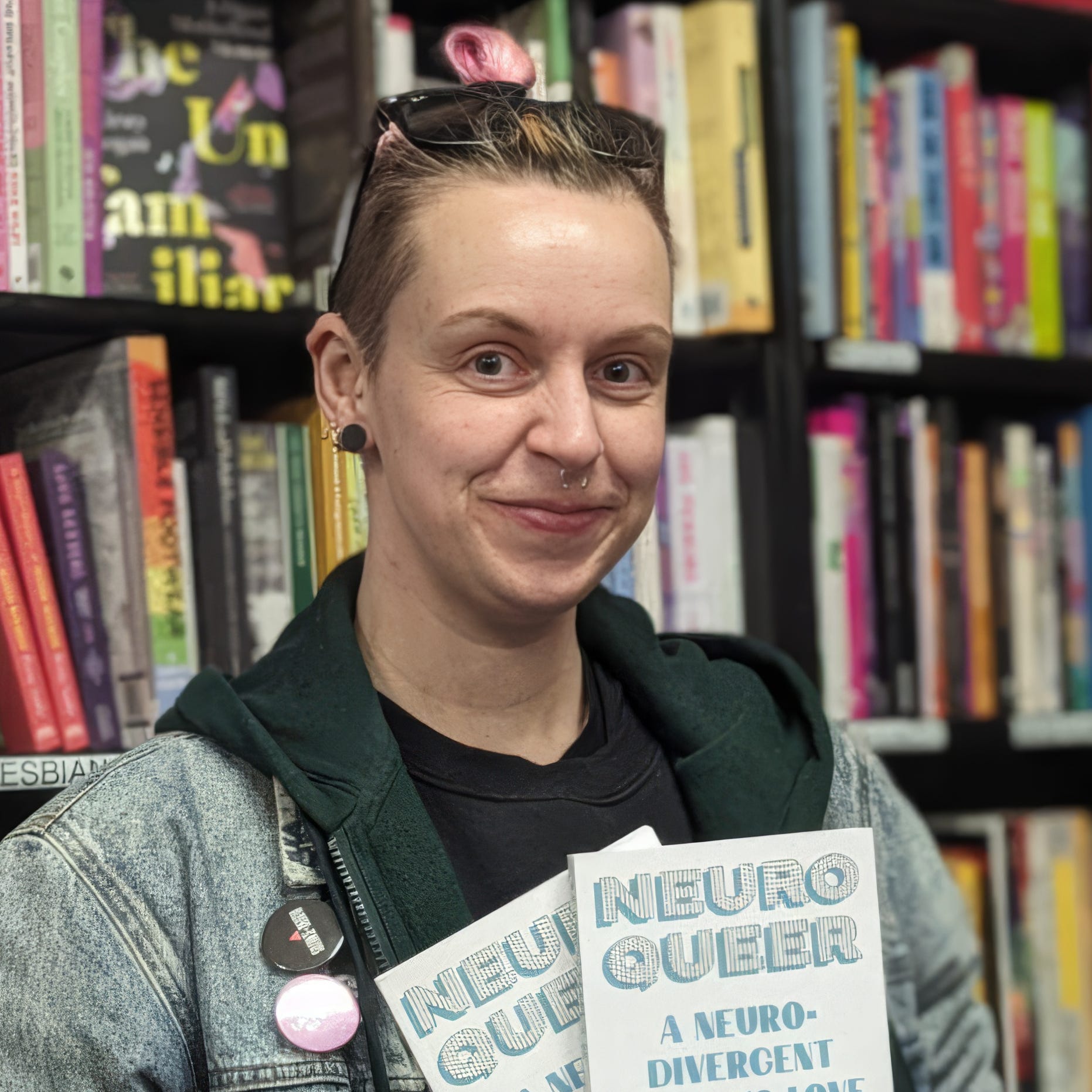
CJ DeBarra (they/them) is queer, non-binary journalist, author and historian from Cork, Ireland residing in Nottingham, UK. They are the author of Neuroqueer (Global Words Press, 2023) and Queer Nottingham volumes one and two (Five Leaves, 2025).CJ is also the founder of the NQHA, an oral history campaign recording queer stories from Nottingham spanning from 1790 to 2025.
Find CJ online at cjdebarra.com


17/02/2026, 15:03 - Finbarre:
Welcome to Tarot DMs with Finbarre Snarey, and today I’m speaking to CJ, who is a queer non-binary journalist, author, and historian from Cork, Ireland, residing in Nottingham.
They are the author of Neuroqueer and Queer Nottingham Volumes 1 and 2, and CJ is the founder of the NQHA, which is an oral history campaign recording queer stories from Nottingham, I believe from 1790 to 2025.
17/02/2026, 15:03 - CJ DeBarra:
Yes, believe it or not, there is a queer history in Nottingham that spans a huge amount of decades.
And I was very lucky to be able to find a newspaper article from 1770 that talks about what we would call queer men today, not the terminology used in 1770, in a barn and workshop, believe it or not.
17/02/2026, 15:06 - Finbarre:
When you peer back through the mists of time into Worksop, were there any words or phrases that jumped out at you? Things that you might never have heard before, maybe bits of slang or terminology, which we really need to bring back?
17/02/2026, 15:08 - CJ DeBarra:
Surprisingly not. A lot of when you go back over, you know, the decades with regards LGBT history, a lot of the time, some of the terminology by what we have today is maybe not what we would consider.
You know, it would probably be a little bit offensive. That said, some of the words of Polari, which was a sort of early queer language, you know, in the 60s in London, is quite fabulous and still with us today, actually.
Things like the word slap for makeup. That’s a really good example. You know, I’m trying to think of some of the other ones now, but a lot of it has been lost with the Sands of Time.
So, for example, Betty Bracelets was slang for police. Irish was slang for a wig.
You know, so I’d love to see us bring back some of the Polari words, but I think maybe the 1770s stuff might need to be skipped!
17/02/2026, 15:11 - Finbarre:
Understood we’ll lose the vocab but we’ll most definitely keep the dress sense! Unfortunately you don’t get the 18th century style frock coats on Vinted no matter how much I look.
Okay we have tarot cards to look at today now I need to ask, CJ, what is your experience with tarot… is it something that you dabbled with in your teenage years, do you have a deck with you now?
17/02/2026, 15:13 - CJ DeBarra:
Yes, so I have a long history with tarot cards, probably spanning back to when I was about 14.
I went through that quintessential early teenage phase of getting really super into witchcraft and Wicca paganism. And I’d always really been into the supernatural as a child, so zero surprises that I ended up being somewhat of a spooky teenager.
I would still say probably that morphed into a spooky adult as a result. I do have one tarot deck, and it was a gift from a friend of mine, and I’m not really sure which one it is. I didn’t realize at the time, actually, that it’s considered bad luck for you to buy your own tarot card, so I’m really glad that my friend bought me a deck. I’ve had it ever since I was a teenager, and I do use it.
I do use it not as often as I used to, but yeah, it’s been with me ever since. And I’d say at least once every six months, I will pull it out and do a quick reading.
17/02/2026, 15:13 - Finbarre:
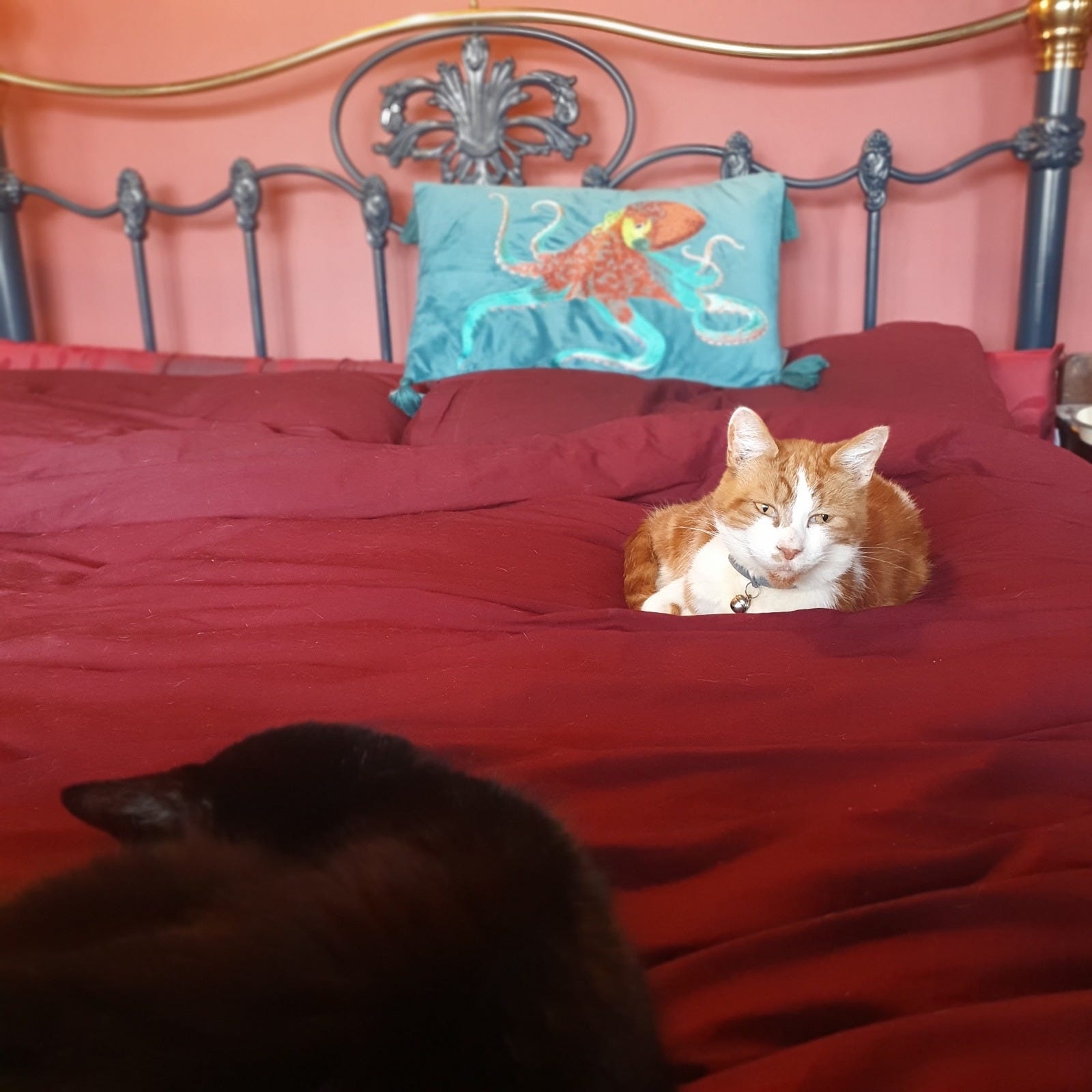
Mentioning the cards just woke up one of the afternoon sleepers in my room here. Here’s Beigli with his “We’re doing this AGAIN” face
17/02/2026, 15:13 - CJ DeBarra: Omgggg so cute
17/02/2026, 15:13 - CJ DeBarra:
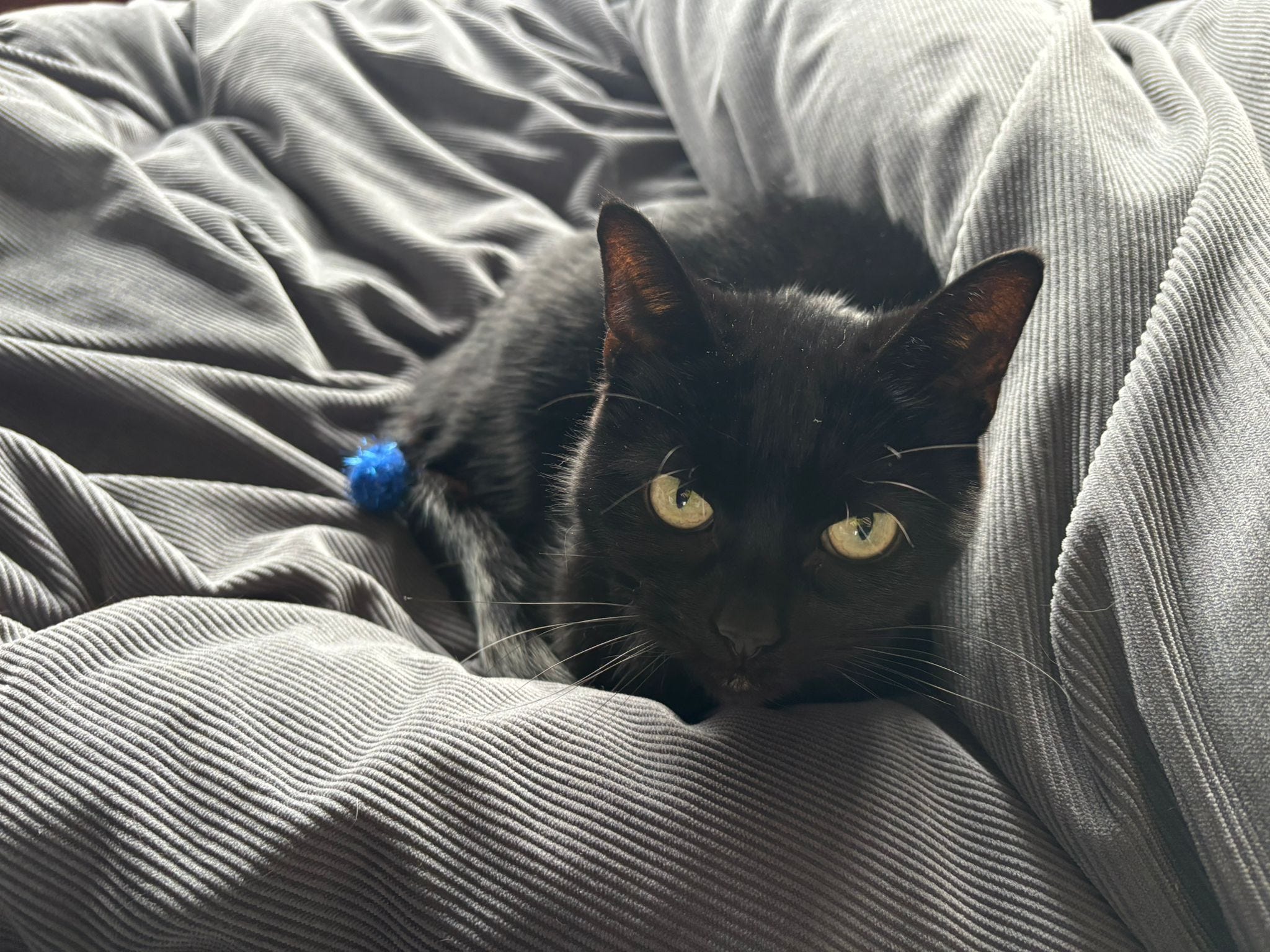
17/02/2026, 15:14 - Finbarre: Who is that adorable voidbeast?
17/02/2026, 15:14 - CJ DeBarra: Spooky teenager means a spooky cat!!
17/02/2026, 15:14 - CJ DeBarra: This is Meeley!
17/02/2026, 15:15 - Finbarre:

Today we’re going to be using Frank Duffy’s marvellous...
17/02/2026, 15:15 - CJ DeBarra: Omg love this
17/02/2026, 15:16 - Finbarre: Isnt that the best name??? I was sold by the crow mention, everything else is icing on the cake
17/02/2026, 15:16 - CJ DeBarra: I love it!
17/02/2026, 15:18 - Finbarre:
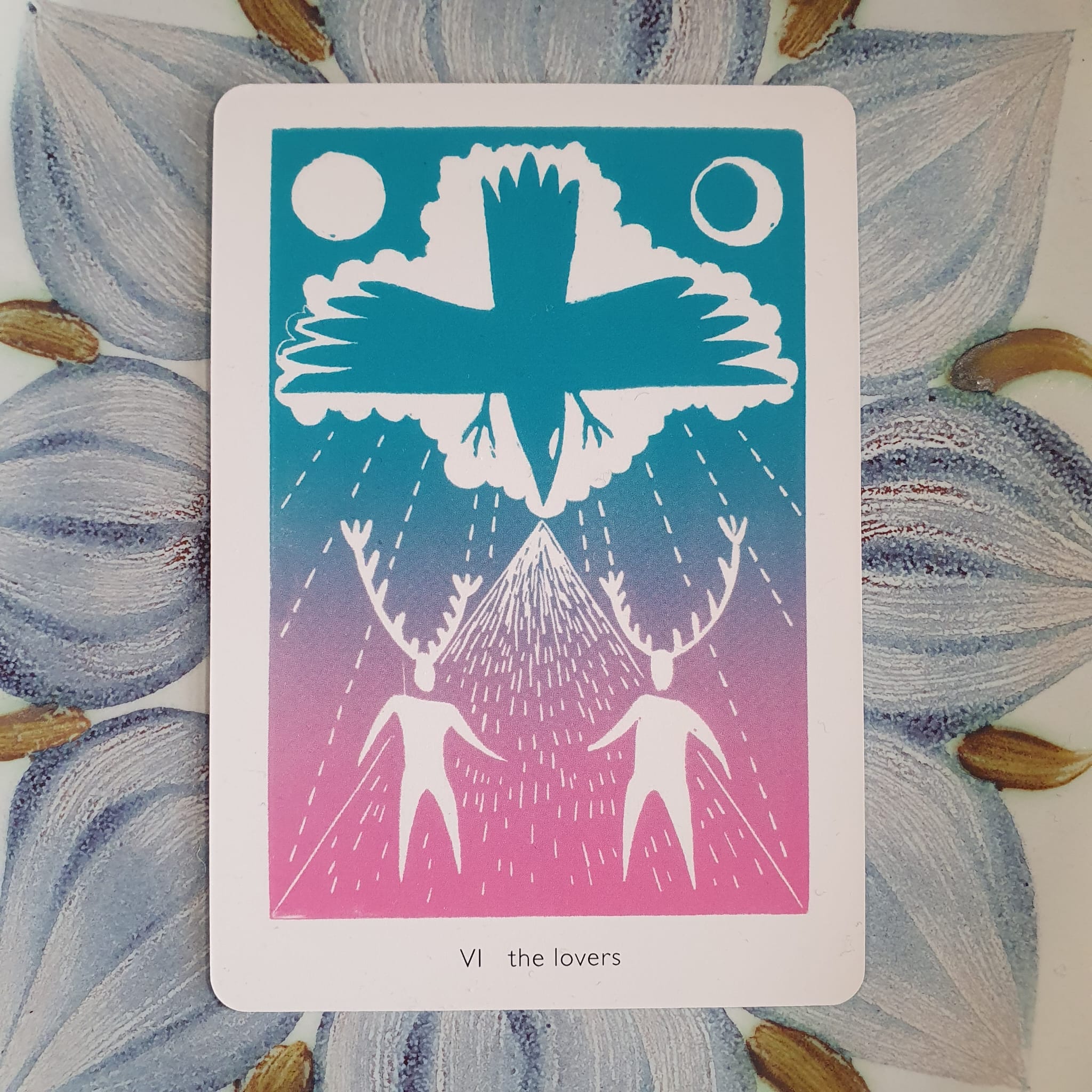
Now, it will come as no surprise that the first card you’ll receive is the Lovers.
Now, this is the anchor card that everyone on Tarot DMs will receive during February, you know, because of the whole Valentine’s Day circus thing.
So what I’ll do is I’ll think of a question based on your career path and the vibes that I get from this card when I pull it out. I’ll place it on a plate.
I’d like to know what kind of energy, what feeling you get from this card.
17/02/2026, 15:19 - Finbarre:
17/02/2026, 15:20 - CJ DeBarra:
I’m conflicted on how I feel about this card. You’re quite right with it being February. It’s possibly, you know, it’s the only card you can draw at this stage. But there’s almost kind of like a… I don’t know, maybe if it’s the artwork to this, but there’s almost like a death card feel to this one, which I’m guessing is because of the name of the tarot deck that you’re using. Also, there’s a giant crow.
But yeah, it’s kind of giving me both love and death vibes. Does that make any sense at all? So maybe, because I know the death card is not about death per se, but new beginnings maybe. I don’t know if that’s looking or reading too much into it.
17/02/2026, 15:24 - Finbarre:
You’re absolutely right. I think this is a very misunderstood card. And when teenagers pluck this from the deck, they think, hey, I’m going to get laid. When there’s far more at play here. This is the light to the devil’s dark, each one being the mirror of the other.
But looking in Frank’s tarot book that came with the deck, it says to paraphrase Leonard Cohen, everything will happen if only you give your words. And that reinforces the sacrifice which you have to give whether it comes to commitment, whether it comes to a good marriage or business partnership. So I’ll go into the question I’m going to ask you.
17/02/2026, 15:25 - Finbarre:
Your work has brought together hundreds of personal stories from people across decades of queer life in Nottingham. As I understand it, there’s underground scenes, liberation activism. So how is queer community here different in Nottingham to anywhere else, for good or for bad?
17/02/2026, 15:29 - CJ DeBarra:
That’s just it. I talk all the time about how important it is for us to know our local stories and stories outside of London, because so much queer history is filtered through London.
I mentioned Polari earlier, and as much as I love Polari, it’s often held up as, you know, a universal queer language that everyone spoke and everyone knew what it was.
When in actual fact, when I’ve done, you know, all the interviews that I’ve done, I’m currently on 195, I believe, off the top of my head. It was very mixed. You know, not many people spoke it. Those that did didn’t speak it fluently. They had the odd word, which only some of them used in general conversations. So it was quite a mixed thing.
If you look at some of the other major events in history, like the lesbian and gay support the minors, for example, that would be completely different in Nottingham, which was a very divided, you know, very mining city.
Still, you know, the reverberations of the strikes are, you know, felt within families and politics today. You know, if you look at that story as it’s filtered through, you know, films like Pride, which they’re all based in London. So that’s not to say that, you know, all history coming from London is bad and all history coming from, you know, small cities and towns is great because, it’s not like that at all.
It just means that we need more of it, more variation.
We’ve definitely got some things to be really proud of in our queer history.
For example, Justin Fashanu, he played for Nottingham Forest, I believe the first gay footballer.
And we’ve also, bizarrely, the first club to ever have a license for solely for LGBT people was in Nottingham. You would expect that to be in London, but it’s not.
It was here.
That was Le Chic on Canal Street. And the UK’s longest running LGBT bar, pub, I should say, is also here and still open today. So there’s lots for us to be proud of. And there’s, you know, we do have some darker moments in history as well. As all places do, London’s the same. So, yeah, queer stories very much vary from place to place.
I should note as well, I recently went to Norfolk to speak to the queer LGBT archive up there. I was talking about how much of a role the gentlemen’s bars in hotels used to play for gay men back in the 50s and 60s. Because they were legitimately a space where gay men could be together, even though, you know, the law was very much not on their side at that point.
The gentleman I spoke to in Norfolk said, well, actually, it was completely different for us. So it’s subtle little things, but, you know, we’ve all got our own individual histories.
17/02/2026, 15:35 - Finbarre:
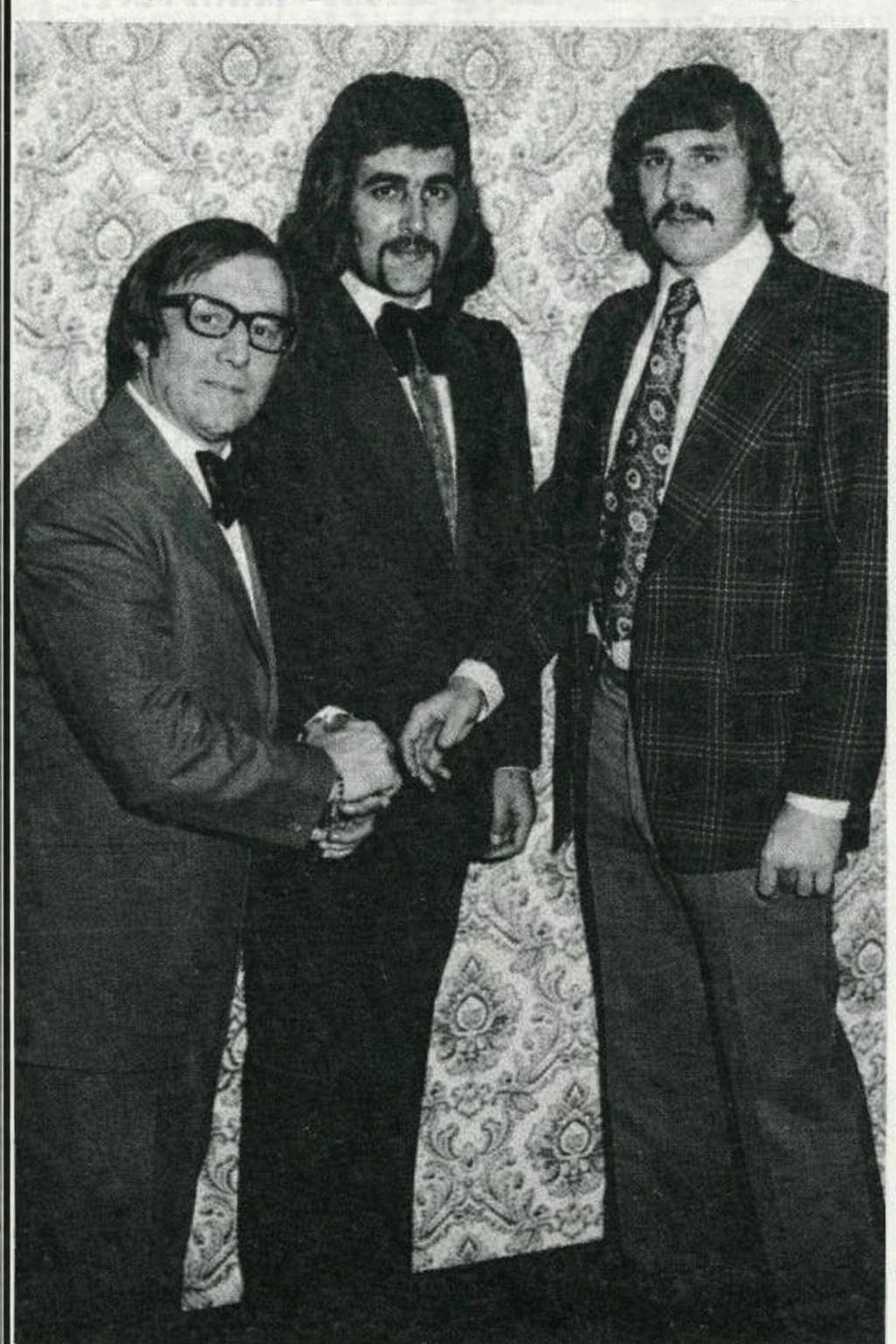
When you mentioned about the first club ever to have a license in the back of my head, I’m thinking, “No, it has to be Manchester, surely!” and I didn’t realize it was Nottingham. And I was doubly surprised it was also on Canal Street. I’ve just looked up some vintage photos from back in the day of some of the chaps that used to go to La Chic on Canal Street. And they all have some wonderful mullets and fabulous ties.
17/02/2026, 15:38 - CJ DeBarra:
The fashion was wild. I mean, one of the glorious things about Le Chic was it existed in two parts, quite literally. So you had the first, you know, Le Chic, the original, and that opened from the early 70s up to about 1977. And that was really the first time that LGBT people, certainly in Nottingham, had had such a glamorous setting.
You know, prior to that, people had to go to like the back bars, the side rooms, the upstairs function rooms of like sometimes some really quite, you know, questionable pubs that were in slightly rougher areas because, you know, the landladies didn’t mind or they were sympathetic or they would just let anybody in because it was against the law at this point.
So as we get into the 70s and finally, you know, the law has partially changed, you know, it takes a long while for people’s attitudes to catch up. And finally, you have this wonderful, glamorous, quite a lot of money spent on developing Le Chic.
And then finally, you have Le Chic part two. So when Le Chic closed in 1977, so many people missed it. And there really wasn’t anything, you know, left afterwards. There wasn’t an equivalent. So one of the regulars from part one, Le Chic part one, actually reopened the club in the early 80s up to about 85, 86.
And that was quite literally called same building, you know, it was called Le Chic Part Two. And that was, I mean, what a difference in a short space of time. It was, I mean, if you’re talking about suited and booted, ties and all, Le Chic part two was definitely a different kettle of fish.
I mean, that was where you would go to see, you know, fashion students, you know, very avant-garde. You’d go to see that you’d see Clones, you know, that very quintessential 80s American gay man.
You had butch lesbians and you also had quite a lot of people that were into sort of more S&M outfits. I remember seeing this fabulous one, this fabulous photo of this guy in like tiny, tiny, tiny little underpants and like just chains hanging off a collar on his neck. It’s just, you know, what a difference in a short space of time.
17/02/2026, 15:42 - Finbarre:
I came to Nottingham in the early 2000s after falling in love with a beautiful teacher on OkCupid, if you remember that site.
When I came down to Nottingham, I went to NG1 and experienced it for myself. Was that the next step from Le Chic?
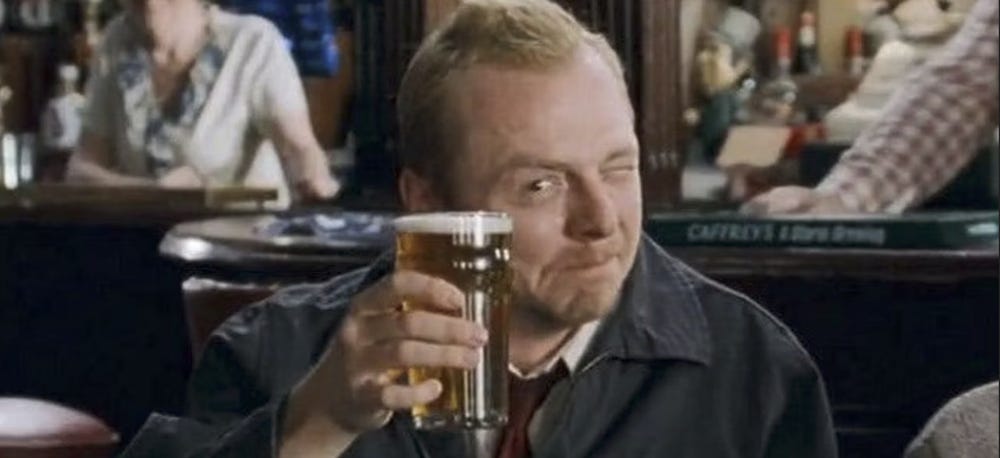
17/02/2026, 15:44 - Finbarre: (Also, the Lord Roberts has not changed ONE JOT. That place is eternal, a better choice than the Winchester in the event of a zombie apocalypse)
17/02/2026, 15:47 - CJ DeBarra:
Actually, no. So when La Chic closed, it would have been mid 80s. And there were other options. So probably the most notable is the once a month disco by Peter Martin, the DJ. And that was called Revolution. And it was held at the Astoria, which is actually around the corner from where Canal Street used to be.
But that was only really once a month, first Monday of every month. Then you had other options. So as you head into the 90s, you have Nero’s on St. James Street, which again has been going for absolutely ages. The same person who owned Nero’s was David Bradley. And the Bradley family, that’s Hilda and her four sons, pretty much ran the entire LGBT scene in Nottingham, or at least it felt like.
Their mother had Gatsby’s, which was the major pub until from roughly 83 to the year 2000, 2001. One of her sons had the Dragon on Angel Row. And David Bradley partnered with Frank Turner to have Nero’s, which was also called Le Mans.
And Club 69 in its time. And David went on to run another club at Madison’s, which was on Goldsmith Street.
So there were other options. And actually, by the 90s, or the end of the 90s, I should say, Nottingham was being hailed as the Queen of Clubs.
And certainly that was cemented when media opened at the Elite Building just on Parliament Street. I mean, that was like nothing people had ever seen before. It was wild. And you have to remember, the 90s was, you know, the big clubbing era. It was the decade of super clubs.
And it was, you know, PlayStation was born in that era as something for clubbers to do. And you had the Ibiza scene becoming massive. You had all these factors. And it was just unlike anything that we have today.
So media opened, and that was absolutely huge. And they also had an LGBT night. So, you know, you had your pop-ups. You didn’t really have anything steady. And that was called Media Darlings. And it was held on occasional nights.
So there were other options. I should give an honourable mention to the house on Huntington Street, although some people will remember that as the Lost Weekend, or they may not remember the Lost Weekend if they did it properly.
And then finally, in the year 2000, 2001, NG1 opened. And that was game-changing because not since Le Chic Part 2 had there been a solely dedicated, you know, Monday to Sunday LGBT club in Nottingham.
And one that really put a significant amount of money into, you know, developing that. There was quite a lot of money invested into NG1.
17/02/2026, 15:50 - CJ DeBarra:
Funnily enough, the Lord Roberts has actually changed a lot. So, the Lord Roberts has been a safe space since I can trace it back to the late 70s, but that’s not to say that that’s actually when it started. That’s just the earliest point where I can find evidence. They used to have drag shows.

In the 1980s, it was run by a straight couple who had a son, and they were very sympathetic. It became a space, and kind of an unofficial one. Then, roughly around 1997, it was queer-owned for the first time, and it sort of remained queer-owned for decades after that, I think roughly until about 2015-ish, give or take.
It used to be very different. First of all, the windows would have had curtains, and you wouldn’t have been able to see into the pub, which was quite common for that era. Also, you have to remember that most LGBT bars really didn’t want you to see into the pub, because it was a safety thing. I know that people I spoke to in interviews said that somebody remembered having a brick thrown through the window of Gatsby’s while they were sitting there. So there was a real safety element to it.
People also didn’t necessarily want to be seen in a gay bar either. If they were struggling to come out, or if it was their first visit, there needed to be an element of people being safe, if that makes sense.
So when it became queer-owned, they very much opened the pub up and opened the windows up. But also, the Lord Roberts used to be comprised of snug bars, and in the late 90s a lot of pubs actually bulldozed through those little rooms and nooks and crannies. If you’ve ever been in the Crown in Beeston, that’s a really good example of a pub that’s held on to some of its snugs and little rooms, and I think it’s all the better for it. It’s actually really lovely in there. I sound like I’m being paid by the Crown to advertise, but they are wonderful. You can still find the occasional bar that has spaces like that, but if you ever want to see what pubs used to be like, that’s the one to head to.
17/02/2026, 15:54 - Finbarre:
That is an incredible whistle-stop tour around what feels to me like a relatively recent period. It’s this rich kaleidoscopic tapestry I was completely unaware of.
17/02/2026, 15:54 - Finbarre:
As a resident of Beeston, I’m completely with you about The Crown, although it’s almost as good as The Pottle, some might say.
17/02/2026, 15:56 - CJ DeBarra:
Yeah, so I’ve been gone from Beeston for a while now. I moved in in 2017 and then I moved out, ironically, the same week of March 2020 that lockdown started. That was when I chose to leave Beeston and I’ve still got great time for it.
But yes, you’re quite right. It is a whistle-stop tour of what it’s like throughout the decades. But that is quite literally what my books are, what my project is. I spend all day researching what Queer Nottingham used to be like, what it’s like today. And yeah, absolutely eat, sleep and breathe it.
17/02/2026, 15:56 - Finbarre:
Photo: The Pottle, Beeston, February 2026
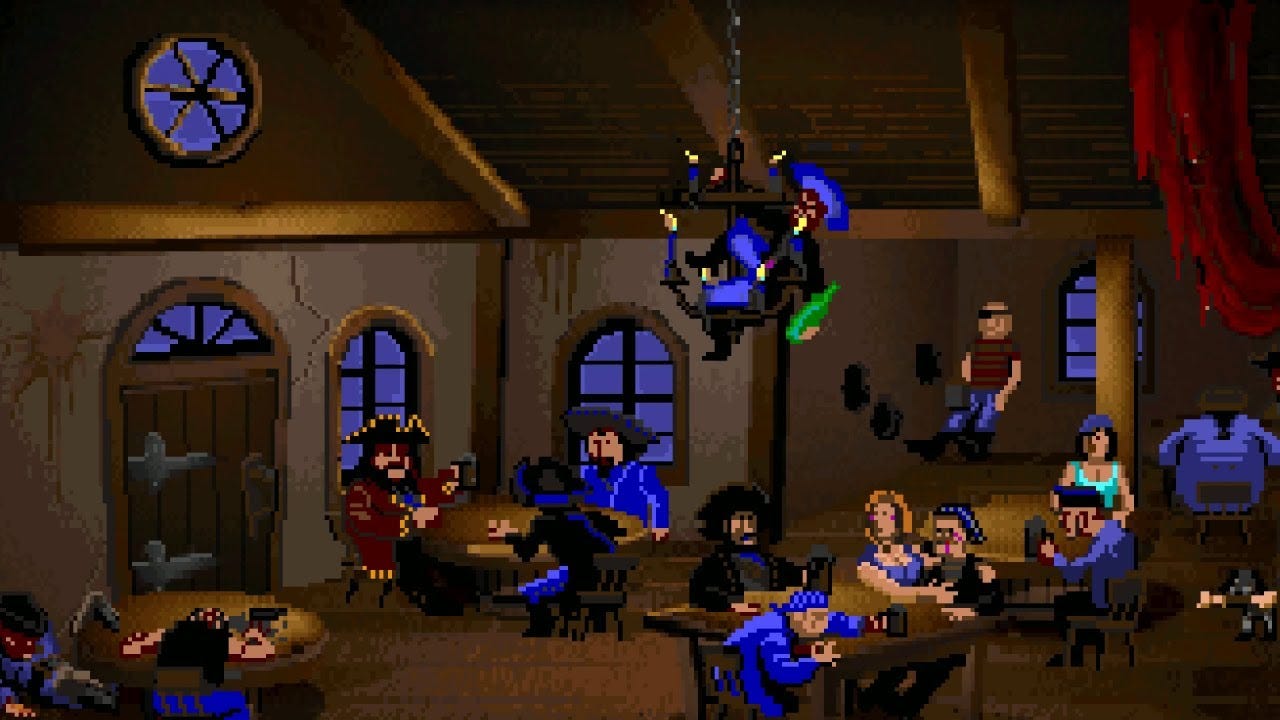
17/02/2026, 15:57 - CJ DeBarra: Very different from the crown!!!
17/02/2026, 15:57 - Finbarre:
CJ, it’s time for your second card. And for this one, I’m going to pick up the deck.
Where are we? There we go. Right. And I’m going to shuffle these as we speak.
When you feel that the moment is right, reach out across Nottingham or wherever you are and say stop.
17/02/2026, 15:58 - CJ DeBarra: Stop
17/02/2026, 15:59 - Finbarre:
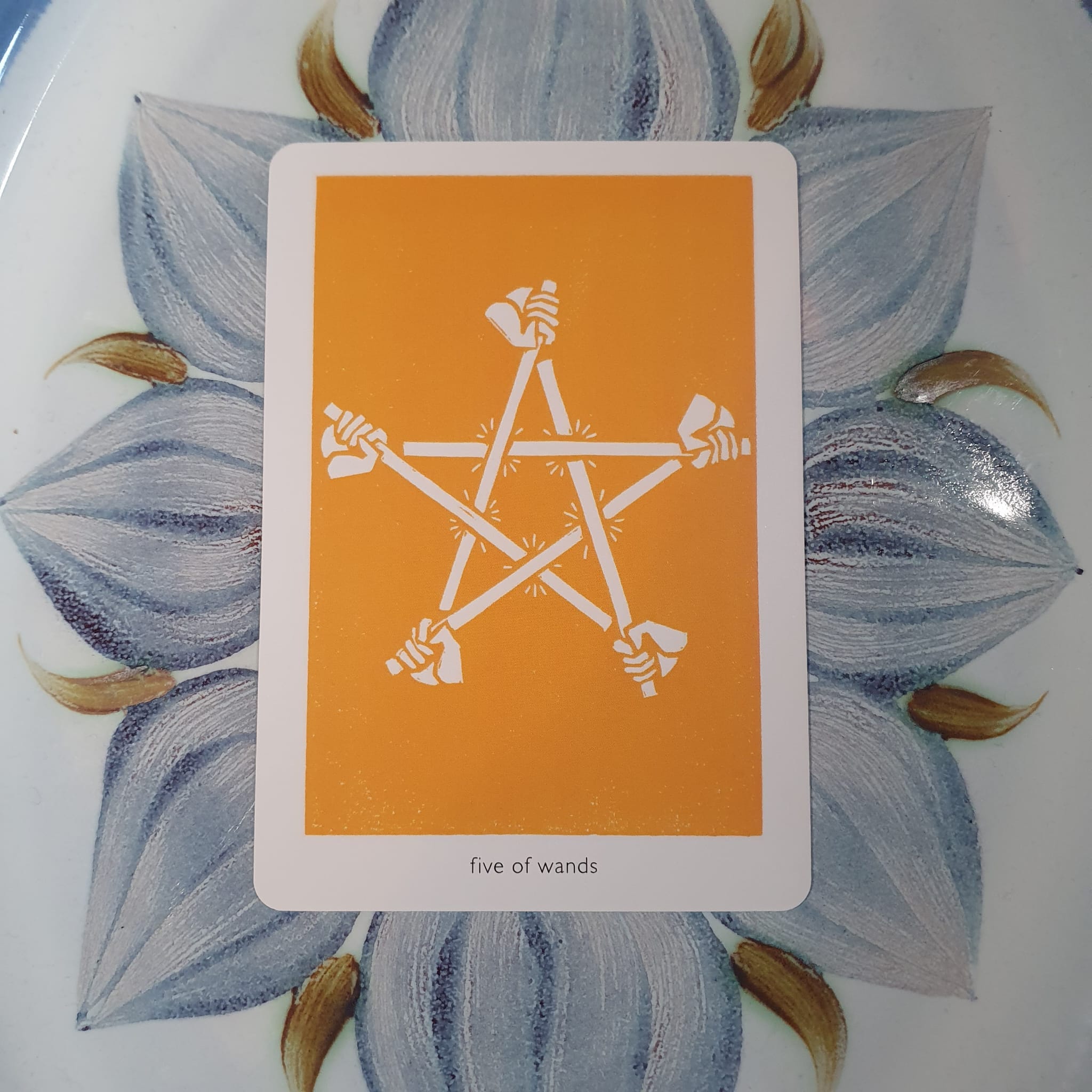
The Five of Wands
17/02/2026, 16:02 - Finbarre:
This is quite an enigmatic depiction of the Five of Wands. In the Rider-Waite-Smith, you have your group of figures battling or appearing to battle with wooden staffs. But if you look closely, no one’s injured, there’s no destruction, there is nothing more than dynamic conflict. You have a collision of energies. So often this is a card of competition and friction.
17/02/2026, 16:03 - Finbarre: Now for your question:
17/02/2026, 16:04 - Finbarre:
Did any of your research uncover any competitive elements or heated rivalries?
17/02/2026, 16:07 - CJ DeBarra:
Thankfully, nothing too bad. I did have to tread very carefully with certain things like, you know, oh, one person said they started this and then another person said they also started it and it was all down to them and, you know, wouldn’t have happened if they weren’t involved kind of thing.
So, you know, because I’ve been writing all of this, you know, all of this up for a book, it’s kind of like, well, who do you credit, you know? And luckily, I come from a journalism background. So I am actually surprisingly weirdly not a historian or any form of archivist or official person in any way, shape or form.
I’m actually a journalist who’s been working in the industry for about 20 years. So I am kind of used to fact checking and doing my due diligence when it comes to things and kind of treading carefully in these in this kind of area as it is anyway.
And I thankfully I kind of know what I can and can’t say as well, which, you know, in terms of like media law.
So, I mean, yeah, I certainly if you want to talk about the pub scene, you know, amazingly, you would think that so many LGBT pubs and clubs would be in competition with each other.
But actually, I was kind of heartened to see how much everybody worked together.
You know, often one club would support, you know, say, for example, Admiral Duncan or New Forrester’s might have something on with NG1 in the evening.
Or, you know, they’d have deals on different days. So they’re not in direct competition, which is kind of really nice. You know, it’s lovely. And you also find and this continues today, I should add.
You also find that a lot of the pubs and clubs here, when they do LGBT nights or they work with the community, they will hire, you know, local drag acts. And you have that kind of scene. There is room for everybody, which is nice.
So you don’t really I mean, you know, you could interview somebody else who works in drag tomorrow and they could totally contradict me. I suppose there’s only a certain amount of gigs to go around.
But, you know, thankfully, I think, yeah, I haven’t really come across anything too bad in terms of competition.
17/02/2026, 16:13 - Finbarre:
You know what, CJ, you’ve got a big smile on my face hearing about how enduringly supportive this community has been in Nottingham.
That has really made my day.
17/02/2026, 16:14 - Finbarre:
It is so lovely to hear and discover that you live in a city of good people.
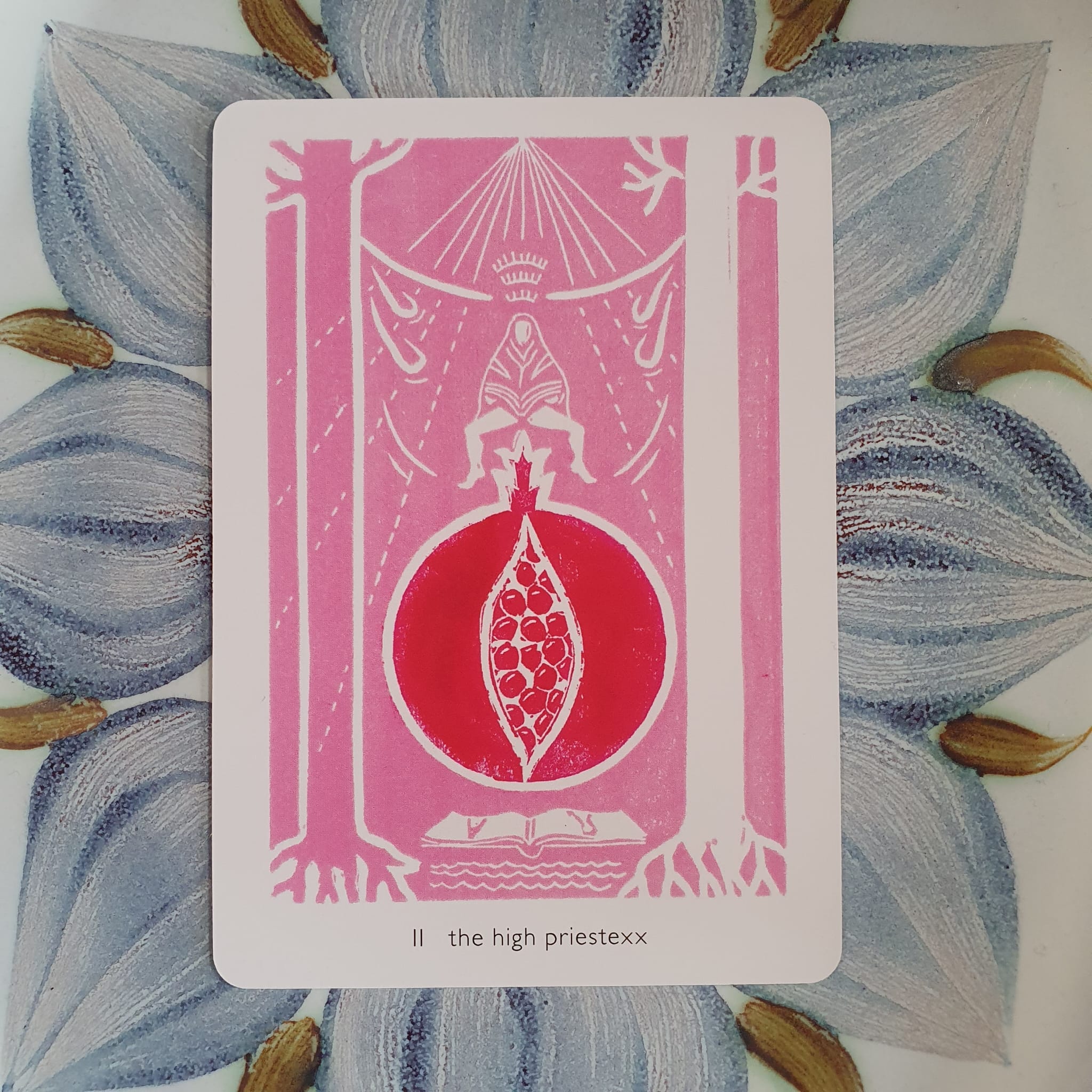
We have card number three. Where has the time gone? I do not know, but I have one card remaining on my desk for you. And this one’s been given to you by the Sunday Times bestseller Lucy Rose, who wrote The Lamb.
17/02/2026, 16:15 - Finbarre: Are you ready?
17/02/2026, 16:15 - CJ DeBarra: Yep!
17/02/2026, 16:15 - CJ DeBarra: Let’s go
17/02/2026, 16:15 - Finbarre:
17/02/2026, 16:15 - CJ DeBarra: Oooh
17/02/2026, 16:15 - Finbarre: IKR
17/02/2026, 16:16 - Finbarre: A fantastic depiction of the card. How’s this one for you?
17/02/2026, 16:16 - CJ DeBarra:
I love it. It kind of looks like a pomegranate… I’m not really sure if that’s somebody sitting over the top of a pomegranate or whether I’ve just got a really weird mind. It’s kind of like a cross between a vagina and a pomegranate.
17/02/2026, 16:18 - Finbarre:
I’m so glad it’s not just me. Also saying this, I got the memory of the legend of Persephone. When she went down into the underworld, she had the pomegranate seeds to consume that unfortunately kept her there as part of some magical contract. But maybe that’s just me.
The question I’m going to ask you is.
17/02/2026, 16:19 - Finbarre:
As the High Priestess deals with subtle signals and emotional undercurrents, when you’ve been researching the hidden histories of the Nottingham queer community, what was it that surprised you the most?
17/02/2026, 16:25 - CJ DeBarra:
I think for me, what surprised me the most and what I really enjoyed was actually finding such a rich history prior to 1967. I started the project in the 60s because I felt realistically with this being a predominantly oral history based project, I’m not really going to find any oral history accounts from prior to that.
What happened was as I was researching, I kept finding all these incredible stories. So I kept putting like a little pin in them and going, it’s not really my research time, but I can’t just let this go.
When I finished the second book, which, you know, the first one covers 1960 to 1990, the second is 91 to 2020. I wondered if I could find enough information to actually write another book. And I was really quite surprised that I could.
There was such a broad mix as well. I mean, one of my earliest stories in the third book is a trans history story from the 1910s. And that’s become one of my favourite stories that I’ve ever worked on, to be brutally honest.
You know, there’s stuff like the danger of the 1950s. I spent a lot of time in Cambridge looking at letters from one gay man to another gay man that are kept there in their archives and the Cambridge University archives.
You know, there was so much there that I hadn’t realised. And that’s before you get into, you know, queer suffragettes, music hall, World War One, World War Two, all of those things. I was just blown away by how much there is.
And still to this day, there’s going to be loads of stuff that is out there that I won’t have found.
You know, that’s why it’s so important that there are so many people taking up projects like this because somebody else with an entirely different background to me will find so much that I haven’t. Iit’s vital that things like that actually happen. But I think I was so surprised at how much there was and how rich it was.
Just honestly, it’s been absolutely incredible. And I think it’s one of the reasons why, you know, I said I’d stop doing this after the after I finished writing the third or actually the second book. I said I’d stop doing this and then I went, well, I’m going to do a third one. And then it was like, well, I’ll stop doing it after the third book. Actually, I think it’s becoming this massive thing where I don’t think I’m going to be able to let it go that easily.
The other thing I was quite surprised about as well was how much risk people took, you know, the because, OK, you can argue that women, you know, it wasn’t illegal. But certainly, you know, you could have your children taken away if it was discovered that you were a lesbian. You still had to contend with the stigma and social opinion and all of those things.
It was just the wonderful, incredible bravery people showed, like the lesbians that went to places like the Napier Inn on Union Street. Some of them, in fact, actually, I’ve just got a whole selection of photographs sent through in the last week that are from the 1960s that show women in suits and, you know, attending those very pubs. It’s just amazing, absolutely amazing.
Again, you know, the men that very much, they were risking jail, medical intervention, fines of all descriptions, you know, that rose the amount of times and all sorts just because they wanted to meet other people. They were lonely. Yeah, that’ll never, ever stop amazing me, quite frankly.
17/02/2026, 16:31 - Finbarre:
CJ, I’ve got one big favor to ask of you before we conclude. I need you to grab a deck of tarot cards and either shuffle it… so place somebody else’s card in the hands of fate… or if there’s one that you have in mind, one that you’ve been thinking about recently, for whatever reason, draw it out, take a picture of it and send it to me.
I’d love to know what it is.
17/02/2026, 16:32 - CJ DeBarra:
17/02/2026, 16:33 - CJ DeBarra:
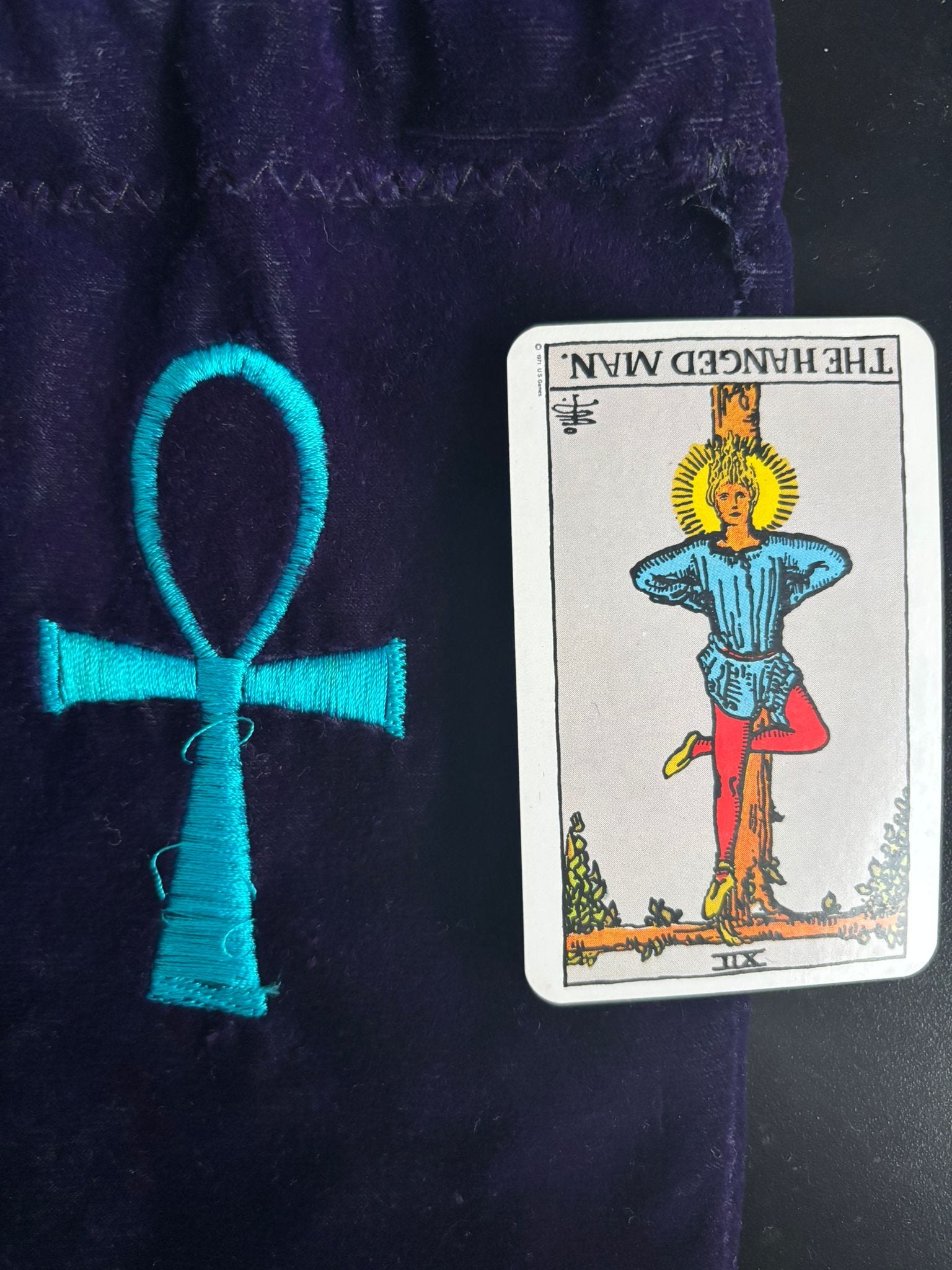
So I just went and grabbed my tarot cards because I know exactly where they’re kept in the house. And this is the card that I drew, the Hanged Man I shuffled.
And I always think if there’s a card that jumps out to you, that’s the one you’re meant to have at that particular time. So there was one that kept getting like stuck as I was trying to shuffle it.
So good luck with that one!
17/02/2026, 16:33 - Finbarre: Gosh. Somebody is going is love this!
17/02/2026, 16:33 - CJ DeBarra: What’s the interpretation?
17/02/2026, 16:35 - Finbarre:
I have to confess that the Hanged Man, weirdly, is one of my favourite cards.
The idea of literally seeing the world from a new perspective, the idea of taking time to regenerate, to know your own mind, is vital in modern society.
But of course, this is reversed. So this is a card of almost refusing to release control. It’s normally a sacred pause, but this is surrender. This is stubbornness. This is hanging on to something that does not serve you…
.. and you’re going to give that to someone else.
17/02/2026, 16:36 - CJ DeBarra:
I knew it. I knew I was going to draw a card that would be trouble. Yeah, I apologise. But hey-ho, sorry!
17/02/2026, 16:37 - Finbarre:
It’s always the hard questions that bring the best answers. CJ, thank you so much for spending time with me today on Tarot DMs and for reintroducing me to my favourite city.
So when I’ll be walking the streets of Nottingham, it will be a new experience knowing what used to be there. When I’m grabbing a pint of mango cider in The Crown or popping onto a tram to go to Lush, what is around me will be seen with fresh eyes. Thank you.
17/02/2026, 16:38 - CJ DeBarra:
You’re so welcome. And thank you so much for having me. I really appreciate it.